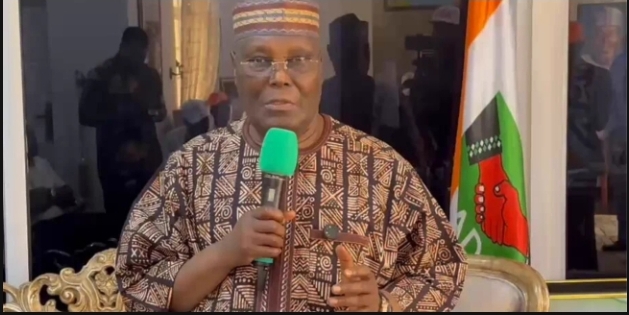
Former Vice President and presidential candidate of the African Democratic Congress (ADC) for the 2027 general elections, Atiku Abubakar, has accused President Bola Tinubu’s administration of impoverishing Nigerians to such an extent that young people are reportedly being driven to sell their kidneys in desperate attempts to survive the country’s worsening economic hardship.
Atiku described the reported development as heartbreaking and frightening, saying the situation demonstrates how deeply the rising cost of living is affecting young Nigerians.
In a statement issued on Friday, Atiku said young Nigerians should be using their talents, ideas and innovations to build their future and contribute to the country’s development rather than being pushed by poverty into considering the sale of their body organs.
“I have heard disturbing stories about the extent to which young Nigerians are being driven simply to survive,” Atiku said.
“Perhaps the most horrifying are the growing reports of young people selling parts of their bodies: kidneys in particular, in desperate attempts to raise money. Young people should be selling dreams, ideas and innovation, not their body organs.
“Yet when the cost-of-living crisis becomes unbearable, desperation begins to make the unthinkable appear like an option. That should offend the conscience of every Nigerian.”
The ADC presidential candidate blamed the Tinubu administration for what he described as the steep rise in the cost of basic necessities, including food, transportation, housing, education, healthcare and electricity.
“In Tinubu’s Nigeria, almost everything required to live with dignity is becoming more expensive by the day: food, transport, rent, school fees, medicine and electricity,” he said.
Atiku said reports that young Nigerians were resorting to kidney sales showed that the country’s economic crisis had moved beyond ordinary hardship and had reached a dangerous level of desperation.
“When young Nigerians begin to see their kidneys as emergency savings, we are no longer talking about ordinary economic hardship. We are talking about desperation at its most frightening,” he said.
He acknowledged that Nigerian laws prohibit commercial organ sales and organ trafficking but argued that legislation alone would not eliminate the poverty and desperation that could make vulnerable Nigerians susceptible to exploitation.
“Nigeria already has laws prohibiting commercial organ sales and organ trafficking. But laws alone cannot cure the poverty and desperation that make vulnerable young people easy prey for criminal networks,” Atiku said.
He also took aim at the economic reforms of the Tinubu administration, arguing that government should not celebrate reforms while citizens struggle to afford basic necessities.
“No government should celebrate ‘reforms’ while young Nigerians are being reduced to selling parts of themselves to eat, pay rent, settle school fees, or survive,” he said.
Atiku called for economic policies focused on improving the welfare of Nigerians, including measures to reduce the cost of food and transportation, make healthcare more accessible and create decent employment opportunities for young people.
“Economic reform must have a human face. It must mean affordable food, cheaper transportation, accessible healthcare, decent jobs, and renewed hope for the next generation,” he said.
“Our young people should be selling their ideas, talents, and innovation to the world and not their kidneys just to survive at home.
“This is the human cost of Nigeria’s cost-of-living crisis. Tinubu made Nigeria expensive. I will make Nigeria affordable again.”
In a separate video message to his supporters, Atiku further condemned the rising cost of living, identifying it as one of the major challenges confronting Nigerians.
“One of the serious challenges we are facing today in this country is the cost of living, which is on the rise, and which is really causing the poverty that we have been noticing before,” he said.
According to Atiku, the welfare and security of citizens should remain among the primary responsibilities of government, with policies designed to ensure that essential commodities and services remain affordable.
“The primary responsibility of any government is the security and welfare of the citizens, and by making sure that the cost of living is low and affordable, no poverty as much as possible,” he said.
“But that is not what we are witnessing today in Nigeria. The reverse is the case, to the extent that young men and women are selling their organs simply because of poverty, lack of jobs, and insecurity that this government has come to impose on Nigerians.”
Atiku further claimed that he had seen photographs purportedly showing young Nigerians who had undergone operations to have their kidneys removed.
“I have many pictures of young men who you see on one side of their tummy and operation, and their kidney is removed,” he said.
“This is heartbreaking. Our poverty has reached that level.”
The former vice president said the alleged kidney sales were among the reasons he had made reducing the cost of living a central part of his political agenda ahead of the 2027 presidential election.
Atiku said an ADC administration would pursue measures aimed at reducing the financial burden on Nigerians and restoring purchasing power.
“We of the ADC, and particularly myself, that is why I insist on taking all measures that will reduce the cost of living; that is why I said I will return the subsidy,” he said.
His comments add a highly controversial dimension to the ongoing political debate over the impact of the Federal Government’s economic reforms, particularly the removal of fuel subsidy and the resulting pressures on transportation, food prices, housing, education, healthcare and household expenses.
Atiku presented the reported kidney sales as a disturbing manifestation of what he described as the human cost of Nigeria’s economic crisis, insisting that young Nigerians should have opportunities to build businesses, develop their talents and create wealth rather than being pushed into desperate choices for survival.
The ADC candidate maintained that economic reforms must ultimately improve the lives of ordinary Nigerians and restore hope among young people, rather than deepen the hardship they face.
He argued that the country’s economic direction requires a fundamental shift towards policies that make life more affordable and create opportunities for Nigerians to live and work with dignity.