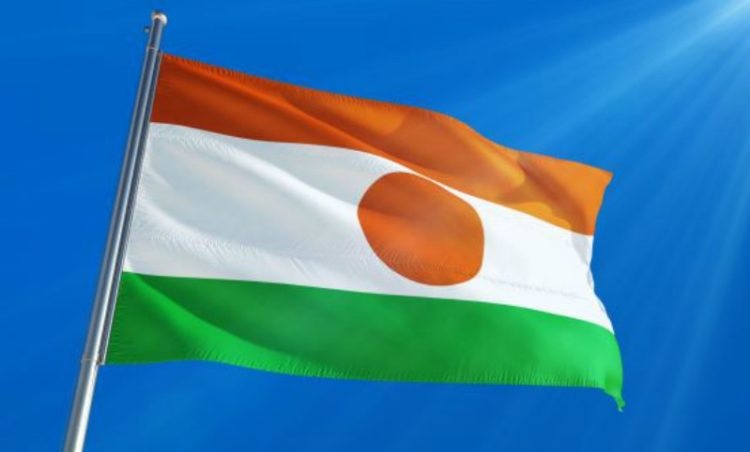
Niger’s military authorities have announced that an attempted mutiny in the capital, Niamey, has been contained after soldiers reportedly attacked key military and government installations, triggering fresh concerns over the stability of the country’s military government.
The unrest began in the early hours of Saturday, August 29, at Base 101, a major military facility located within Diori Hamani International Airport in Niamey.
According to reports, renegade soldiers detained some of their colleagues and opened fire at sensitive locations, including the airport area, the presidential palace and the headquarters of Niger’s state broadcaster.
The state broadcaster was temporarily taken off air as gunfire and explosions were reported in parts of the capital, raising fears of another attempt to overthrow the military government that seized power in July 2023.
Niger’s Defence Minister, General Salifou Mody, said security forces responded to the mutiny and eventually regained control of the affected areas.
The military-led government subsequently announced that the mutiny had been contained, while state television reported that dozens of soldiers had either been killed or arrested in connection with the incident.
The ruling National Council for the Safeguard of the Homeland, known by its French acronym CNSP, urged residents to remain calm.
“Our Defence and Security Forces are mobilised for the Defence of the Fatherland. Let us remain united, vigilant and supportive,” the military council said.
The whereabouts of Niger’s military ruler, General Abdourahamane Tchiani, were not immediately confirmed following the reported attacks.
The incident has raised fresh questions about the cohesion of Niger’s armed forces and the ability of the junta to maintain control amid a worsening security crisis.
Tchiani seized power in July 2023 after overthrowing democratically elected President Mohamed Bazoum. The military authorities had justified the takeover by accusing the civilian government of failing to contain armed groups operating across the country.
However, almost three years after the coup, armed groups linked to al-Qaeda and the Islamic State continue to carry out deadly attacks despite the junta’s efforts to strengthen military cooperation with Russia.
Reports indicate that some of the soldiers involved in the mutiny were young troops deployed from areas outside Niamey, including Ouallam, Tera and Dosso, where Nigerien forces have suffered heavy casualties while fighting armed groups.
Heni Nsaibia, a senior West Africa analyst with the Armed Conflict Location and Event Data project, said repeated attacks against Nigerien forces were contributing to growing tensions within the military.
“These mass-casualty overrun attacks on the Nigerien military are becoming commonplace and will continue to fuel unrest and aggravate tensions within the army ranks,” Nsaibia said.
Security expert Kabir Adamu also described the mutiny as an indication of deeper institutional and structural challenges within Niger’s military establishment.
The Abuja-based analyst identified concerns over military deployment, equipment and the rotation of troops, warning that the locations targeted by the mutineers suggested that the incident was more than a routine military grievance.
According to Adamu, the targets showed that the incident was “clearly an attempt to overthrow the government.”
He warned that unless General Tchiani addresses the underlying security and socioeconomic challenges that contributed to the 2023 takeover, similar unrest could emerge again.
“If [Tchiani] does not address the deep-rooted socioeconomic, cultural, environmental and security challenges that he promised when he took over power in July 2023, then those issues will continue to rear their head,” he said.
The incident also drew attention from Russia, whose government-linked Africa Corps has been supporting Niger’s military authorities.
Russia’s ambassador to Niger, Viktor Voropaev, reportedly said the Africa Corps was asked to assist Nigerien authorities in neutralising the mutineers.
Base 101 is also home to the general staff of the Alliance of Sahel States, known as AES, comprising Niger, Mali and Burkina Faso, as well as the headquarters of the Africa Corps in Niger.
The three military-led countries formed the AES after distancing themselves from the Economic Community of West African States, ECOWAS, following their respective military takeovers.
Mali and Burkina Faso expressed support for Niger’s military leadership, describing the mutiny as a “betrayal by a group of soldiers involved in a destabilisation plot.”
It was not immediately clear whether Mali or Burkina Faso provided direct military assistance to Niger during the unrest.
Algeria condemned the incident and expressed its “full solidarity and firm support” for Niger, while Türkiye called for restraint and said it hoped calm would be restored as soon as possible.
Nigeria also expressed concern over the latest development, warning against the use of force to resolve political disputes in the neighbouring country.
In a statement issued on Sunday by the Ministry of Foreign Affairs, the Nigerian Government said it was “deeply concerned” about the political and security situation in Niger.
Abuja stressed that Nigeria and Niger share close historical, fraternal and cultural ties and said it remained interested in seeing peace, security, democracy and development restored in the neighbouring country.
“Any resort to the use of force to settle political differences detracts from this objective,” the ministry said.
Nigeria urged the Nigerien government and its people to work towards an inclusive and participatory process aimed at restoring stability and constitutional order.
“It therefore urges the government and people of Niger to work together towards an inclusive and participatory return to stability and constitutional order in the interest of the country, regional peace and stability,” the ministry said.
The attempted mutiny comes after a series of serious security incidents targeting Niger’s capital and military installations.
In January 2026, the Islamic State in the Sahel claimed responsibility for an attack on an air force base at Diori Hamani International Airport and an adjoining military facility.
In June, an armed attack on the Niamey airport reportedly killed 11 soldiers and two civilians.
The continuing attacks have intensified pressure on Niger’s military leadership, which came to power promising to improve security and protect the country from armed groups.
The latest mutiny therefore presents General Tchiani’s government with another major challenge as it attempts to maintain control over the military while confronting an entrenched jihadist insurgency, heavy battlefield casualties, socioeconomic difficulties and growing questions over the effectiveness and unity of the armed forces.
The development has also renewed wider concerns about political stability across the Sahel, where military governments in Niger, Mali and Burkina Faso have increasingly moved away from traditional regional alliances while deepening security cooperation with Russia.