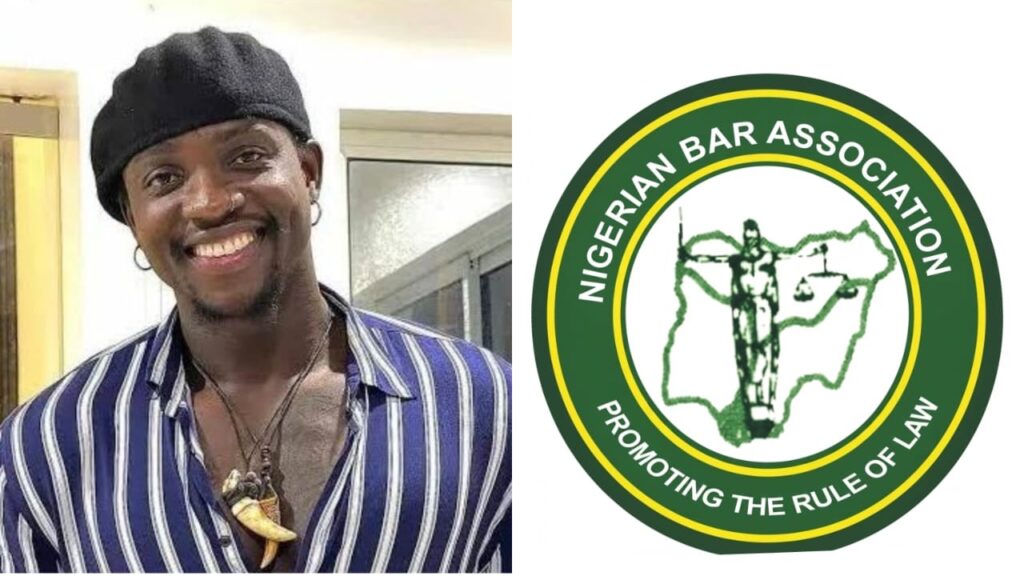
A founding partner at Lawgem LP, N.D. Abdulsalam, Esq., has defended social commentator VeryDarkMan (VDM) following the controversy surrounding his appearance at the Nigerian Bar Association (NBA) Conference, arguing that Nigerians should focus on the substance of his interventions rather than his status, appearance or the venue where he spoke.
Abdulsalam, in a commentary on the controversy, described as a fallacy the belief that a statement becomes true or false based on the status of the person making it or the venue where it is made.
According to him, the reaction of some lawyers to VDM’s allegations, particularly those concerning the alleged complicity of the military and police in Nigeria’s worsening security situation, has largely focused on attacking the messenger rather than engaging with the issues raised.
He argued that the controversy reflects a broader problem within Nigerian society, where citizens have become accustomed to systemic failures and, in some cases, contribute to an environment that allows corruption and institutional dysfunction to persist.
Abdulsalam maintained that the widespread perception among Nigerians that security agencies may be complicit in the country’s insecurity crisis did not emerge in isolation, but from citizens’ experiences and observations of events across the country.
He questioned why the public discourse should shift from the substance of VDM’s claims to his personality and the appropriateness of the platform on which he made them.
“It is against logic to abandon such an important discussion to focus on the maker of the statement and the venue,” he argued.
The lawyer also responded to a position attributed to human rights lawyer Femi Falana, SAN, that the panel at the NBA Conference ought to have featured security experts.
Abdulsalam questioned how many recognised security experts had travelled to places such as Benue State during periods when residents were being killed in large numbers.
He argued that expertise should not become a basis for dismissing contributions from individuals who have demonstrated practical engagement with societal problems.
According to him, VDM has participated in protests and advocacy campaigns against insecurity and poor governance and has contributed to what he described as social re-engineering.
“VDM has participated in social re-engineering more than many Nigerians,” Abdulsalam said, stressing that Nigerians should be more concerned about the content of an argument than the status or background of the person making it.
Using an analogy, the lawyer compared the controversy to a situation where a vehicle owner refuses to take a car to a roadside mechanic simply because the mechanic does not possess a mechanical engineering degree.
He questioned whether VDM’s informal appearance and lack of conventional legal or professional credentials should automatically disqualify him from contributing to discussions at an NBA event.
“So VDM is not fit for a panelist at the NBA Conference simply because he does not wear a suit and tie?” he asked.
Abdulsalam further argued that Nigeria needs a legal profession and institutions that place greater emphasis on participation in social transformation and addressing societal problems rather than merely preserving professional status.
He attributed VDM’s growing popularity to what he described as systemic failures that established institutions, including the legal profession, have failed to adequately address and, in some instances, may have helped perpetuate.
According to him, the fact that some Nigerians increasingly turn to social commentators and activists to seek redress or draw attention to their grievances should serve as a warning to established institutions.
“Today, Nigerians would rather go to VDM than go to court,” he stated.
He said the development should prompt serious introspection within the legal profession and other institutions about why citizens may increasingly perceive informal platforms as more accessible or responsive than conventional avenues for justice and accountability.