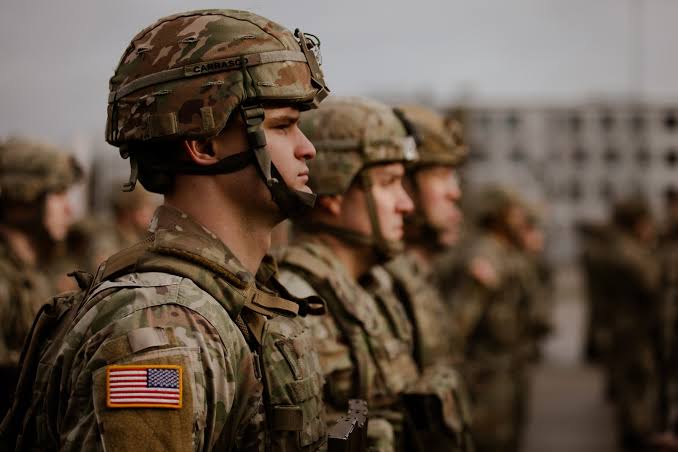
The United States is set to withdraw about 200 troops deployed to Nigeria in support of counterterrorism operations, bringing to an end a military mission that American officials say delivered significant intelligence and operational successes but failed to halt ongoing attacks by insurgent groups across the country.
According to a report by The New York Times, the troops were deployed to northeastern Nigeria in February following concerns raised by US President Donald Trump over attacks on Christians and the growing activities of terrorist groups in the country.
The deployment expanded an existing American military presence that had been assisting Nigerian forces through intelligence sharing, training and operational support aimed at identifying and targeting terrorist networks.
US officials said the joint efforts culminated in a major operation in May that led to the killing of Abu Bilal al-Minuki, described as a senior Islamic State leader. The operation reportedly involved close cooperation between US and Nigerian forces.
American military officials also disclosed that more than 200 militants were subsequently killed in airstrikes and ground operations carried out jointly by both countries. The operations reportedly involved the use of MQ-9 Reaper drones and AC-130 gunships.
Despite these gains, terrorist attacks have continued in several parts of Nigeria. In recent weeks, gunmen killed more than two dozen people, including an imam, in northwestern Nigeria, while at least 25 others were killed in an attack on a community in central Nigeria.
The report further noted that insurgents launched a major assault on a military base in northeastern Nigeria on Saturday, underscoring the persistent security challenges facing the country despite months of intensified cooperation between Washington and Abuja.
US Africa Command spokesperson, Colonel Becky Heyse, described the Nigerian mission as evidence that a limited and temporary American military presence can produce measurable security gains.
“Our recent joint efforts in Nigeria are a prime example of how this tailored, temporary footprint can yield significant security returns,” Heyse said.
The Nigerian military did not respond to requests for comments on the planned withdrawal, according to The New York Times. However, US officials said a smaller number of military trainers and intelligence personnel would remain in Nigeria after the larger contingent departs by late September.
The withdrawal follows a period of closer military ties between the two countries. In July, President Trump and President Bola Tinubu exchanged letters reaffirming support for continued security cooperation, while a senior Nigerian military delegation met with American officials in Washington on August 13 to discuss shared security priorities.
US-Nigeria security relations shifted significantly late last year after Trump threatened military intervention over what he described as the killing of Christians by terrorist groups.
On Christmas Day, US warships, reportedly working with Nigerian intelligence services, launched 16 Tomahawk missiles at terrorist targets in northwestern Nigeria. The United States later expanded its support by deploying military personnel to assist Nigeria with intelligence gathering, training and joint operations.
In May, American and Nigerian forces carried out the operation that killed al-Minuki, whom Trump described as a key Islamic State figure.
Security analysts have, however, warned that the withdrawal of the larger American contingent could create opportunities for terrorist groups to regroup if Nigeria fails to sustain the intelligence capabilities and operational strategies developed during the partnership.
Malik Samuel, a Nigerian security analyst, said recent operations had achieved notable successes, particularly in the northeast, where Nigerian forces had carried out targeted strikes against Islamic State insurgents.
Another security analyst, Kabir Adamu, cautioned that reduced American intelligence support could weaken pressure on terrorist groups and allow them to rebuild their networks.
The withdrawal is expected to place greater responsibility on Nigerian security agencies to maintain intelligence gathering, coordinated operations and sustained pressure on insurgent groups, while the remaining US personnel continue to provide limited training and intelligence support.