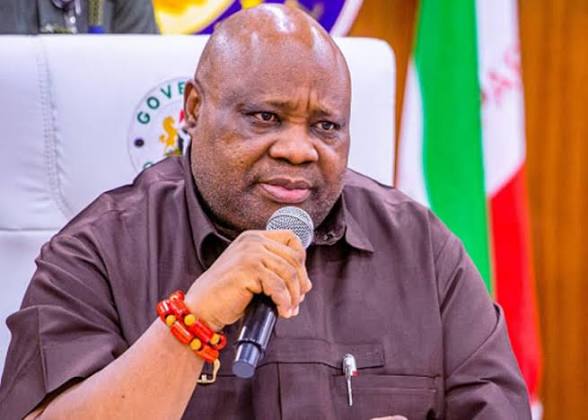
Civil society and pro-democracy organisations in Ogun State have launched a scathing attack on the Economic and Financial Crimes Commission (EFCC), accusing the anti-graft agency of undermining democracy and creating the impression that it is being used as a political tool against opposition-controlled states after freezing the Osun State Government’s statutory allocation account barely 10 days before the August 15 governorship election.
In a strongly worded petition addressed to the Executive Chairman of the EFCC, the groups described the timing of the commission’s action as “highly suspicious,” arguing that it raises serious concerns about the agency’s political neutrality and could compromise public confidence in the credibility of the forthcoming governorship election.
The petition, signed by Bankole Solomon, warned that the freezing of the state’s account could paralyse governance by disrupting the payment of salaries and pensions, slowing the delivery of essential public services and creating unnecessary hardship for millions of Osun residents.
Although the organisations acknowledged the EFCC’s statutory responsibility to investigate allegations of financial crimes, they insisted that such powers must be exercised with fairness, transparency and strict adherence to constitutional principles.
According to the groups, freezing the account of an entire state government in the heat of an election season goes beyond law enforcement and creates the perception that the commission is interfering in a democratic process.
«”To freeze the accounts of an entire state government at this critical period, when salaries, pensions, health services, security votes and election-related governance activities are ongoing, creates avoidable hardship for millions of citizens,” the petition stated.»
«”This action, coming so close to an election, gives the impression of an attempt to cripple the state government and influence the electoral process.”»
The groups further accused the anti-corruption agency of selective enforcement, arguing that similar actions had not been taken against other state governments with pending corruption investigations.
“The people of Osun and Nigerians at large are watching,” the petition stated. “If this action is truly in the public interest and non-partisan, we expect to see similar decisive actions against all states with pending investigations, regardless of the political party in power.”
The organisations warned that any perception that the EFCC was acting in the interest of the ruling party at the federal level would erode the credibility of the anti-graft agency and weaken public trust in Nigeria’s anti-corruption institutions.
They also argued that the decision violates the principles of federalism and due process by punishing innocent citizens before any investigation has been concluded.
“It punishes innocent citizens for an investigation that has not concluded. This approach contradicts the principles of due process and the rule of law enshrined in the 1999 Constitution,” the petition added.
The groups therefore demanded the immediate removal of the Post-No-Debit restriction imposed on the Osun State Government’s statutory allocation account to allow governance to continue unhindered, including the payment of salaries, pensions and the provision of essential public services.
They also urged the EFCC to publicly explain why the account was frozen barely 10 days before the governorship election, disclose the urgent circumstances that warranted such action and assure Nigerians that it would not interfere with the democratic process.
“The EFCC was created to fight corruption, not to be perceived as fighting opposition. Nigerians expect the Commission to be independent, professional and above partisan politics,” the petition concluded.
The petition followed reports that the EFCC directed First Bank Plc to place a Post-No-Debit restriction on the Osun State Government’s Statutory Allocation Account as part of an ongoing investigation.
The anti-graft agency maintained that the directive was issued pursuant to the provisions of the EFCC (Establishment) Act, 2004, and the Money Laundering (Prevention and Prohibition) Act, 2022.
The development came after Governor Ademola Adeleke had raised an alarm that the EFCC was planning to freeze the state’s accounts and those of senior government officials in what he alleged was an attempt to cripple his administration ahead of the governorship election.
While questioning the legal authority of the commission to freeze the account of a state government, the governor’s fears appeared to be confirmed after the EFCC issued the directive placing the state’s statutory allocation account under a Post-No-Debit restriction, setting the stage for what is expected to be a fierce legal and political battle in the days leading to the August 15 governorship election.