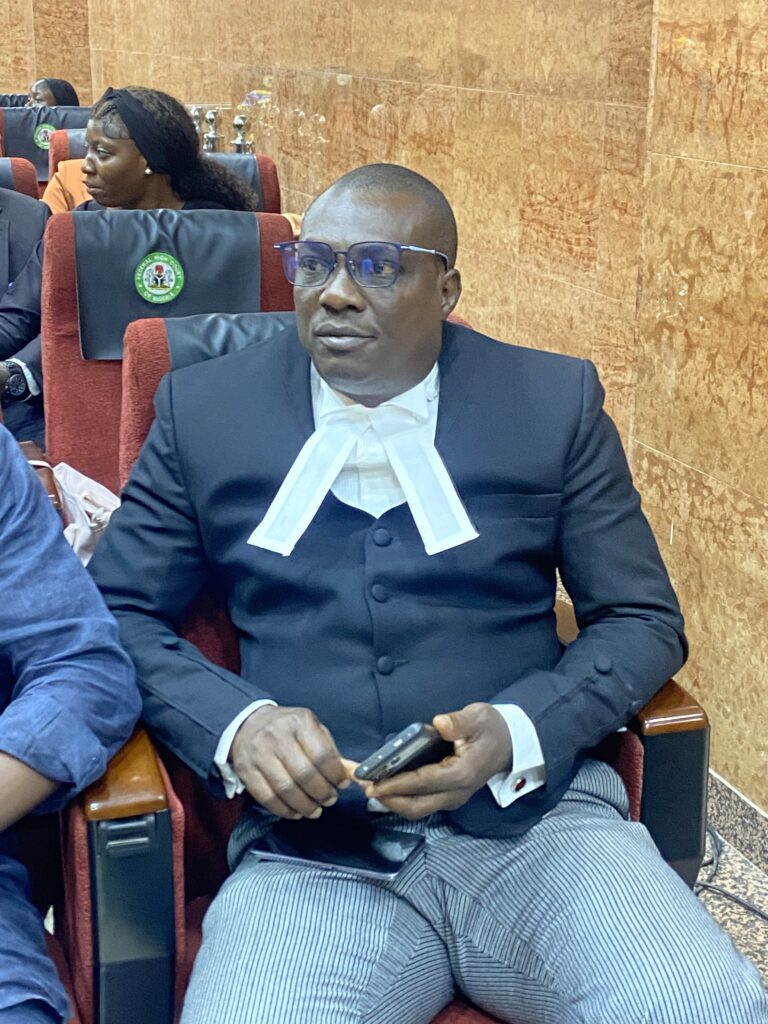
Lawyer and public affairs commentator Tope Temokun has argued that Nigeria’s political challenges extend beyond leadership failures, insisting that the country’s most pressing democratic deficit is the lack of political education among its citizens.
Temokun made the remarks on Sunday while speaking at the People’s Power Space on X (formerly Twitter), where the advertised topics of discussion were “Tinubu and the State vs. Omoyele Sowore” and “The Lawlessness of the DSS.” Rather than focusing on the personalities involved, he said he deliberately redirected the discussion toward the broader issues of state institutions, constitutional democracy, political philosophy and the relationship between citizens and power.
According to him, reducing political conversations to individual actors often limits public understanding of deeper institutional and structural issues affecting governance.
He explained that instead of discussing President Bola Tinubu as an individual, he examined the Nigerian State as an institution, while using the prosecution of Omoyele Sowore as a case study to discuss what he described as the political trial of the Nigerian citizen.
A major focus of his lecture was what he described as the “myth of political structure,” a concept that frequently dominates electoral discussions in Nigeria.
Temokun questioned the widely held belief that electoral success depends solely on conventional political structures such as ward executives, local government officials, party delegates, patronage networks, regular meetings, vote-buying mechanisms and other traditional party machinery.
He argued that while these visible structures exist, there is another form of political structure that is often overlooked.
According to him, there is an invisible structure made up of millions of Nigerians who feel neglected, cheated, unheard and frustrated by the country’s political system but continue searching for individuals capable of articulating their concerns.
Using Omoyele Sowore as an example, Temokun argued that if the activist and politician truly lacked political relevance, the Nigerian State would not have repeatedly arrested, detained and prosecuted him or devoted significant institutional attention to his activities.
He maintained that whether one agrees with Sowore’s political views is secondary to the reality that many citizens identify with the issues he raises and see him as a voice for their frustrations.
Temokun further argued that many politically active Nigerians often underestimate the influence of emerging grassroots movements because they measure political strength only through the lens of traditional party structures.
Drawing from political history, he noted that enduring political movements are often built first in the minds of citizens before eventually becoming visible at the ballot box.
According to him, some political structures remain invisible until historical events reveal their true strength, adding that dismissing unconventional movements simply because they do not resemble established political parties reflects a limited understanding of how political change develops.
While acknowledging that the future will determine whether such movements eventually translate into electoral victories, he cautioned against concluding that they do not exist simply because they operate outside conventional political frameworks.
Temokun concluded that Nigeria’s democratic progress depends not only on changing leaders but also on improving citizens’ understanding of politics, governance, constitutional democracy and public institutions.
To advance that objective, he announced the commencement of a weekly Facebook series titled “POLI-DUCATION,” scheduled to begin on Monday.
According to him, the initiative will focus on political philosophy, constitutional democracy, governance, citizenship, power, institutions and the ideas that shape nations.
He expressed the belief that Nigeria’s politics can only mature if citizens develop a deeper understanding of democratic principles and political institutions, adding that meaningful national transformation begins with political education.