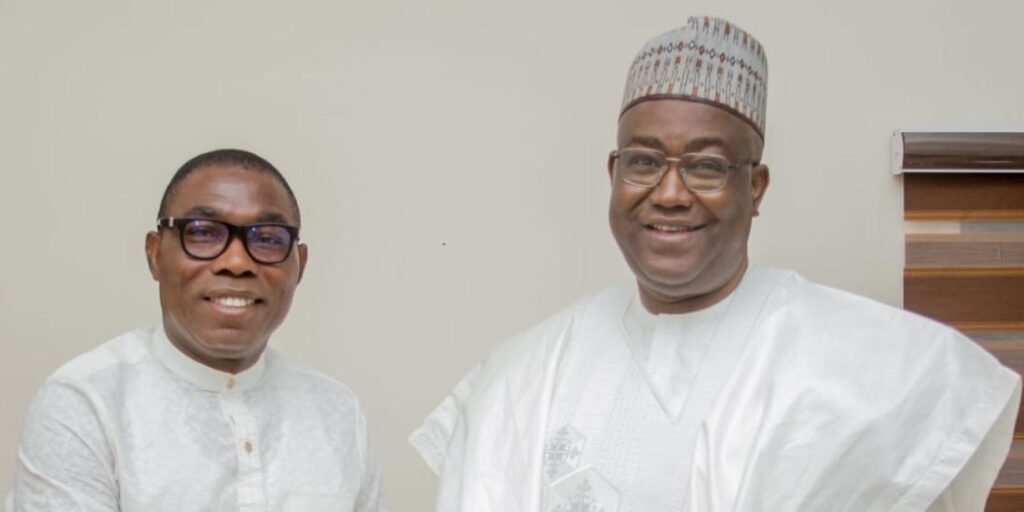
Fresh signs of a major political realignment within Nigeria’s opposition camp emerged on Friday as the 2023 presidential candidate of the Accord Party, Dr. Gbenga Olawepo-Hashim, held a strategic meeting in Abuja with his Social Democratic Party (SDP) counterpart, Prince Adewole Adebayo, amid growing consultations aimed at reshaping the country’s political landscape ahead of the 2027 general elections.
The high-level engagement has fuelled fresh speculation that leading opposition figures and pro-democracy advocates are quietly laying the foundation for a broad coalition that could challenge the dominance of the ruling establishment in the next electoral cycle.
Sources familiar with the discussions disclosed that the consultations are focused on forging democratic cooperation, strengthening public institutions and developing a coordinated response to what participants describe as mounting threats to Nigeria’s democratic space.
The meeting also comes as talks between Olawepo-Hashim and African Action Congress (AAC) presidential candidate, Omoyele Sowore, are said to have intensified. Sources revealed that discussions have equally expanded to include other prominent pro-democracy leaders and civil society actors committed to constitutional governance, electoral integrity and far-reaching democratic reforms.
According to insiders, the consultations have progressed beyond routine political engagements and are increasingly centred on building a long-term alliance among opposition leaders who share similar democratic values, reform-driven agendas and centre-left political ideals.
The latest developments follow the recent launch of the Movement for Democratic Renewal (MDR) by Olawepo-Hashim in partnership with leaders of the Nigeria Labour Congress (NLC), a platform designed to champion democratic renewal, strengthen institutions and mobilise citizens in support of governance reforms.
Olawepo-Hashim co-chairs the movement alongside NLC President, Joe Ajaero.
Promoters of the initiative argue that years of internal crises within political parties, declining public confidence in elections and weakening democratic institutions have made comprehensive political and governance reforms an urgent national imperative.
While none of the political leaders involved has publicly disclosed the full scope of the ongoing consultations, sources said engagements with other opposition presidential candidates, labour leaders, civil society organisations and pro-democracy groups will continue in the coming weeks.
Political observers believe the series of consultations could culminate in one of the most significant opposition alliances since Nigeria’s return to democratic rule, with the potential to reshape the contest for power ahead of the 2027 general elections.