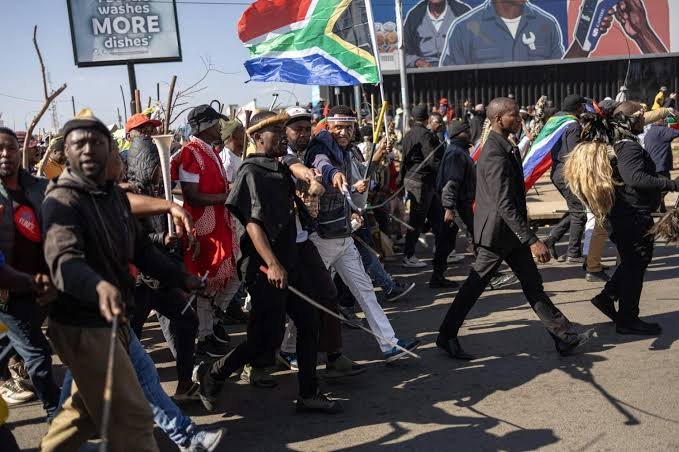
The Nigerian Government has strongly condemned the killing of two Nigerian nationals in South Africa, demanding an immediate investigation and prosecution of those responsible while raising fresh concerns over the safety of Nigerians amid what it described as growing xenophobic and Afrophobic attacks in the country.
In a statement issued on Sunday through the Ministry of Foreign Affairs, the government identified the victims as Emeka Charles Iroegbu and Musa Yunana Joe, popularly known as “Big Joe.”
According to the ministry, Iroegbu was allegedly killed by officers of the Tshwane Metro Police on June 28, 2026, in Sunnyside, Pretoria, during what officials described as “gruesome interrogation techniques.”
The ministry further disclosed that the same security outfit had earlier been linked to the death of another Nigerian, Nnaemeka Mathew Andrew Expenyong, who was allegedly extra-judicially killed on April 20, 2026.
The Federal Government noted that despite the identities of the four officers involved being known to the South African Police Service (SAPS), no arrests have been made and the matter remains unresolved, a development it said raises serious concerns about justice and accountability.
The second victim, Musa Yunana Joe, was reportedly shot dead in front of his business premises in Witbank, Mpumalanga, on the same day by yet-to-be-identified assailants.
Nigeria said the killings occurred at a time when foreigners, particularly African migrants, are increasingly becoming targets of violence and intimidation across South Africa.
The government warned against what it described as deliberate attempts to stigmatise Nigerians by portraying hard-working and law-abiding citizens as criminals, insisting that such narratives only fuel hatred and violence against innocent people.
It stated that the persistent attacks have heightened fears over the safety and security of Nigerians and other foreign nationals living in South Africa.
The Ministry of Foreign Affairs argued that the recurring pattern of violence, particularly cases allegedly involving members of the Tshwane Metro Police, points to possible complicity by security personnel and raises questions of state responsibility under international law.
According to the statement, records compiled by Nigerian diplomatic missions in South Africa provide sufficient grounds for criminal liability in several unresolved cases involving Nigerian victims.
The government also condemned comments reportedly made by a South African government spokesperson, who challenged Nigerians leaving the country because of xenophobic unrest to reveal where illegal drugs were hidden.
Abuja described the remarks as inflammatory, irresponsible, and unacceptable, insisting that such broad accusations against an entire nationality amount to hate speech capable of encouraging violence against innocent members of the Nigerian community.
The statement maintained that careless and derogatory comments by senior government officials could embolden criminal elements and worsen the already tense atmosphere confronting foreign nationals.
Nigeria further warned that leaders of anti-immigrant groups such as March on March and Operation Dudula, accused of inciting violence and hatred against fellow Africans, could face regional and international criminal accountability for their actions.
The Federal Government called on South African authorities to immediately investigate the latest killings alongside other unresolved cases involving Nigerians and ensure that perpetrators are brought to justice without further delay.
It stressed that allegations or suspicions against any individual must never replace due process, insisting that every person deserves to be presumed innocent and granted a fair hearing before a competent court of law.
While extending condolences to the families of the deceased, the government urged Nigerians residing in South Africa to remain calm, law-abiding, and vigilant, advising them to avoid volatile areas and relocate to safer communities where necessary.
The ministry also reminded South African authorities that their citizens and businesses continue to operate freely and securely in Nigeria without intimidation or harassment, adding that the protection of foreign nationals is a fundamental obligation under international law.
The latest incidents have revived painful memories of previous waves of xenophobic violence that forced Nigeria, alongside countries such as Ghana and Malawi, to evacuate their citizens from South Africa following deadly attacks and widespread destruction of property.
Despite repeated assurances by Cyril Ramaphosa that his administration would decisively tackle xenophobic violence, incidents targeting foreign nationals have continued to cast a shadow over Africa’s most industrialised nation.
The killings have once again ignited outrage across Nigeria and renewed calls for stronger continental action against Afrophobia, xenophobia, and the growing culture of impunity surrounding attacks on Africans by fellow Africans.