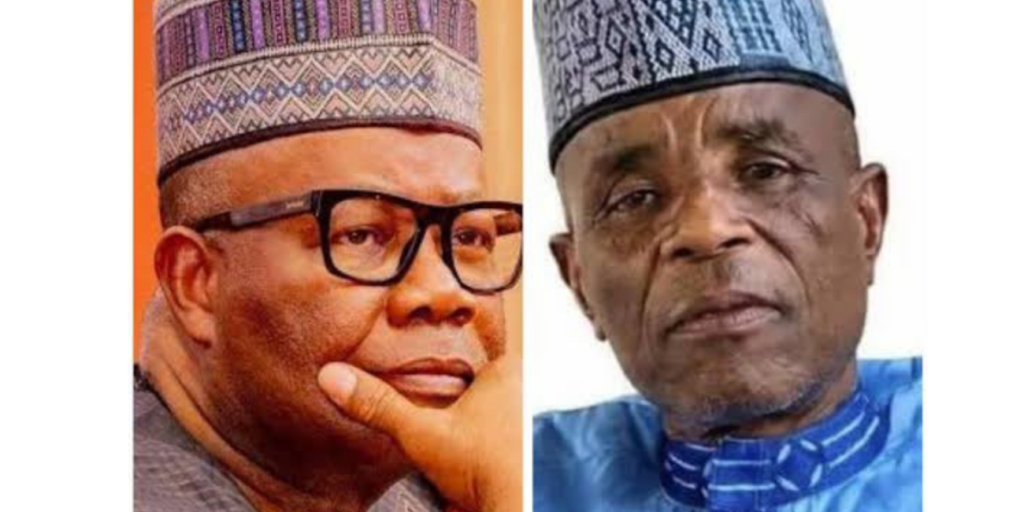
The Federal High Court in Abuja on Thursday granted a N5 million bail to social media critic and politician, Garus Gololo, who is standing trial over allegations of cybercrime, defamation and the dissemination of false claims against Senate President Godswill Akpabio.
Justice Rita Ofili-Ajumogobia admitted Gololo to bail in the sum of N5 million with one surety in like amount. The court ruled that the surety must be a Grade Level 12 officer in the Federal Civil Service, as proceedings in the closely watched case continue.
Gololo had earlier pleaded not guilty to all seven counts preferred against him by the Inspector-General of Police.
The prosecution arose from a viral video and a series of Facebook posts in which Gololo allegedly claimed that Akpabio had declared that Northerners must support President Bola Tinubu’s re-election in 2027 or face political exclusion, allegedly boasting that “with or without the North, Tinubu would win.”
The allegations triggered widespread controversy and condemnation, particularly across Northern Nigeria, where the purported remarks generated heated political debate.
However, the Office of the Senate President vehemently denied that Akpabio ever made such statements, describing the claims as “completely false, malicious and deliberately intended to mislead the public and incite tension.”
The office maintained that the allegations had “no basis in fact” and urged Nigerians to disregard them, insisting that the Senate President remained committed to national unity and inclusive governance.
In a strongly worded statement signed by Akpabio’s Special Adviser on Diaspora and Non-Governmental Organisations, Malam Jibril Lawal Tafida, the Senate President’s camp called on security agencies to investigate Gololo and compel him to provide evidence, including the time, venue and circumstances under which the alleged remarks were purportedly made.
The statement further accused Gololo of repeatedly using insulting language against Akpabio and alleged that his criticisms were politically motivated attacks directed not only at the Senate President but also at the ruling All Progressives Congress and President Tinubu.
According to the statement, the circulation of such claims was capable of deepening ethnic and political divisions and undermining the country’s fragile national cohesion.
The Senate President’s office consequently urged Northern leaders and stakeholders to reject what it described as inflammatory narratives designed to sow discord and weaken national unity.
Gololo’s defence counsel, Mohammed Habu, represented him during the arraignment and secured the bail application, maintaining that his client remained innocent until proven guilty and was prepared to face trial.
The controversy surrounding Gololo was further heightened in May when the Nigerian Army publicly disowned claims that he was a retired Major General.
The military intervention followed reports suggesting that Gololo, described in some quarters as a retired Army officer, had been arrested at Grand Square Supermarket in Abuja after criticising Akpabio over comments linked to the 2027 presidential election.
In a formal clarification, the Nigerian Army categorically stated that Gololo was neither a serving nor retired officer and had never served in the military in any capacity, describing contrary reports as false and misleading.
The case, which sits at the intersection of politics, free speech and Nigeria’s cybercrime laws, has continued to attract national attention amid growing debates over the use of legal instruments to address contentious political commentary on social media.
The matter was adjourned for further proceedings as Gololo moves to perfect his bail conditions pending trial.