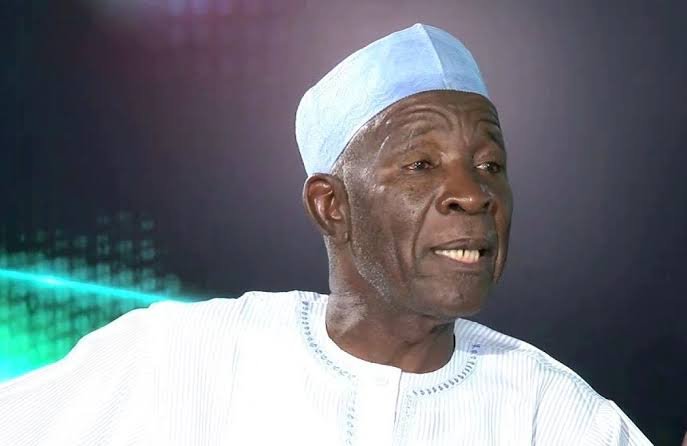
A chieftain of the Nigeria Democratic Congress (NDC), Buba Galadima, has alleged that President Bola Ahmed Tinubu and state governors are pushing for the creation of state police as part of a broader political strategy to intimidate opponents and influence the outcome of the 2027 general elections rather than genuinely addressing the country’s security challenges.
Galadima made the allegation during an interview on Arise Television while reacting to ongoing constitutional amendment efforts aimed at establishing state police across Nigeria.
According to him, the campaign for decentralised policing is being driven by political interests ahead of the next general elections and not by any sincere desire to tackle the nation’s worsening insecurity.
“Nobody ever conceived the idea of state police to sort out security. If the police and military cannot solve security situations in Nigeria, I wonder how state police will be able to do that. All that we know is that the president and governors are looking for state police before the elections so that they can use them as political thugs to attack the opposition,” Galadima said.
His comments come amid renewed legislative moves to establish state police, following the passage of a constitutional amendment bill by the Senate to create a legal framework that would permit states to operate their own police services alongside the Nigeria Police Force. The proposal, which enjoys the backing of President Tinubu, still requires approval by at least two-thirds of state Houses of Assembly before becoming law.
Supporters of the initiative have argued that decentralising policing powers would enable faster responses to insecurity, particularly in rural communities grappling with terrorism, banditry, kidnapping and communal violence. They maintain that a centrally controlled police structure has become overstretched and ineffective in confronting Nigeria’s numerous security threats.
However, critics have repeatedly warned that state-controlled police formations could become instruments of political persecution in the hands of governors, especially during election periods.
Galadima’s position aligns with concerns earlier expressed by the Peoples Redemption Party, which described the Tinubu administration’s push for state police as suspicious and questioned the government’s credibility to undertake such a significant restructuring of the country’s security architecture.
The party argued that although security reforms remain necessary, any far-reaching changes to Nigeria’s policing system should be implemented by an administration that enjoys broad public trust and has demonstrated competence in managing existing security institutions.
The debate over state police has remained one of the most contentious issues in Nigeria’s political landscape, with proponents insisting that local policing is essential to addressing insecurity, while opponents fear that it could hand governors powerful tools capable of suppressing dissent, intimidating critics and influencing electoral outcomes.