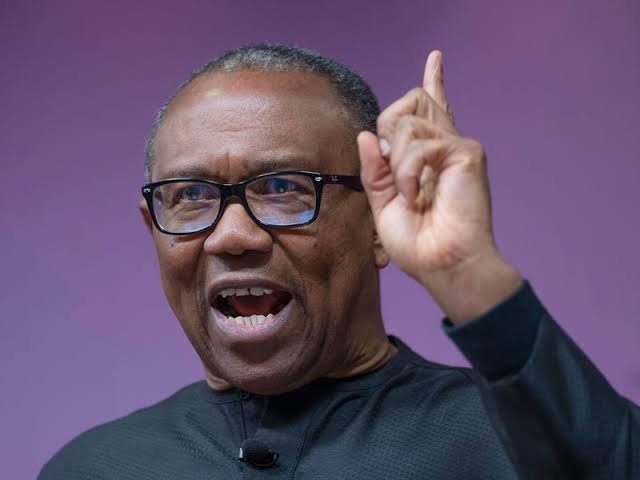
The presidential candidate of the Nigeria Democratic Congress (NDC) for the 2027 general elections, Peter Obi, has called on the Independent National Electoral Commission (INEC) to publicly publish the academic certificates and credentials submitted by every candidate seeking elective office, insisting that transparency remains indispensable to credible democratic governance.
Obi, who was the presidential candidate of the Labour Party in the 2023 elections, argued that greater openness in the electoral process would strengthen public confidence and eliminate persistent controversies surrounding the qualifications of political office seekers.
The former Anambra State governor made the call in a statement issued on Tuesday, June 30, 2026, titled, “What Truly Should Be Our Priority Now as Leaders of a Nation?” in which he questioned whether Nigeria’s political leadership was demonstrating the qualities of sound and responsible leadership amid worsening insecurity, hunger and allegations of corruption in public institutions.
According to Obi, the reflection was prompted while he was completing his INEC nomination form on Monday.
“This question has become necessary, given where we are today as a nation and where we are supposed to be,” Obi stated.
He disclosed that a particular question in Section E of the nomination form forced him to reflect on the state of leadership in the country.
“While completing my INEC nomination form yesterday, Section E, Question 1 caught my attention. It asks: ‘Have you ever been adjudged a lunatic or been declared a person of unsound mind?’ The answer is either Yes or No.
“That question got me thinking: Can we, as the political leaders of today’s Nigeria, truly say we are exhibiting the characteristics of a sound mind?” he queried.
Obi lamented the deteriorating security situation and deepening economic hardship across the country, arguing that leaders ought to be preoccupied with rescuing the nation rather than engaging in endless political calculations and contests for power.
According to him, millions of Nigerians continue to face uncertainty, fear and deprivation while political actors remain consumed by partisan considerations.
“When Nigerians, including children and security personnel, are being abducted into the bushes, citizens cannot travel safely on our highways, several million Nigerians are uncertain where their next meal will come from, and several billions are being siphoned frivolously through non-existent agencies and projects, should politics really be our primary preoccupation?” Obi asked.
He maintained that any leadership acting with a genuine sense of responsibility would have treated the country’s mounting crises as a national emergency deserving urgent and coordinated action.
“A sound-minded leadership would have declared these existential challenges a national emergency and immediately mobilised all relevant institutions, security agencies, experts, community leaders, and other critical stakeholders to confront them with urgency and resolve.
“At a moment like this, the survival, security, and stability of Nigeria must take precedence over every other considerations.
“This is a time for decisive action, not political calculation or the pursuit of partisan advantage,” he added.
Obi further drew attention to another provision contained in the INEC nomination form relating to forged certificates, insisting that the question itself reinforces the need for full public disclosure of candidates’ academic records.
“Further, in the same Section E, Question 6 was: ‘Have you ever presented a forged certificate to INEC?’ Again, the answer is either Yes or No,” he stated.
“This raises another important question: Why shouldn’t INEC, in the interest of ensuring that our leaders are exemplary in following the rules and to strengthen public confidence in our electoral process, publish the academic certificates and credentials submitted by every candidate seeking elective office?
“Transparency strengthens democracy and builds public trust. Nigeria’s problems are too serious for politics as usual.
“It is time for leadership defined by competence, character, capacity, compassion, and commitment to service.”
SaharaReporters had earlier reported Obi’s demand for greater transparency in the nation’s electoral process, with the former governor maintaining that public access to candidates’ credentials would discourage the submission of questionable documents and deepen accountability within the political system.
Political observers argue that such a measure, if adopted, could significantly transform electoral scrutiny in Nigeria by empowering citizens, civil society organisations and the media to independently verify the qualifications of those seeking public office.
The call has also reignited broader conversations on electoral reforms and the urgent need to rebuild public trust in democratic institutions at a time when many Nigerians continue to express concerns over governance, accountability and national leadership.
For Obi, however, the message remains clear: a nation confronted by insecurity, hunger and allegations of corruption cannot afford politics driven by secrecy, personal ambition and partisan calculations, but must embrace transparency, competence and service as the foundation of genuine leadership.