As the Minister of the Federal Capital Territory (FCT), Nyesom Wike, prepares to inaugurate newly elected Area Council chairmen at 4 p.m. on Monday, political observers and residents are already raising questions over the implications of the polls for Nigeria’s democratic future and the 2027 general elections.
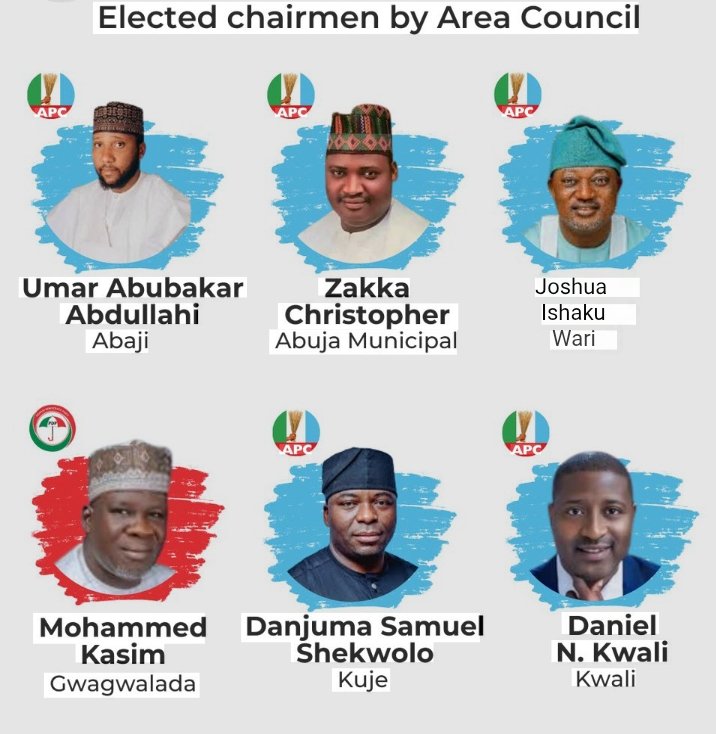
The inauguration follows the conclusion of the 2026 FCT Area Council elections, which saw the All Progressives Congress (APC) secure chairmanship victories in five of the six Area Councils, while the Peoples Democratic Party (PDP) retained control of Gwagwalada Area Council through its candidate, Mohammed Kasim Abubakar.
The Gwagwalada contest stood out as the most fiercely disputed race of the elections. Following the declaration of results, the APC candidate, Usman Yahaya, approached the court alleging irregularities and seeking to overturn the outcome. However, after reviewing the case, the court affirmed Kasim Abubakar’s victory, bringing legal closure to one of the most contentious electoral battles in the FCT.
Official results showed that Kasim Abubakar polled 22,165 votes to defeat his closest challenger, who secured 17,788 votes.
Despite the conclusion of the electoral process, concerns over the conduct of the elections have persisted in some quarters, particularly in the Abuja Municipal Area Council (AMAC), where residents alleged instances of electoral malpractice and undue political influence. While such allegations remain unproven by electoral authorities or the courts, they have continued to shape public discourse surrounding the credibility of the exercise.
The role of the FCT Minister, Nyesom Wike, has also remained a subject of intense debate. Wike, a prominent figure in the PDP and a minister in the administration of President Bola Tinubu, openly campaigned for candidates of the APC during the elections, a move that drew criticism from opposition voices and civil society groups who questioned the implications of such political alignments in the nation’s capital.
Ahead of the commencement of the inauguration ceremony, some residents expressed concern over what the outcome of the FCT polls could mean for future elections in the country.
Speaking on the development, an Abuja resident, Mohamed Biko, posed a question that has increasingly resonated across political circles:
“Is the FCT council election a test ground for the forthcoming general election?” he asked.
His remarks reflect a growing sentiment among some residents and analysts who view the FCT elections not merely as local contests, but as an early indicator of the political dynamics that may shape the 2027 general elections.
As the chairmen-elect prepare to assume office, expectations are high that governance and service delivery will take precedence over partisan battles. Yet, lingering debates over political influence, electoral integrity and democratic accountability suggest that the 2026 FCT Area Council elections may remain a significant reference point in Nigeria’s evolving political landscape.