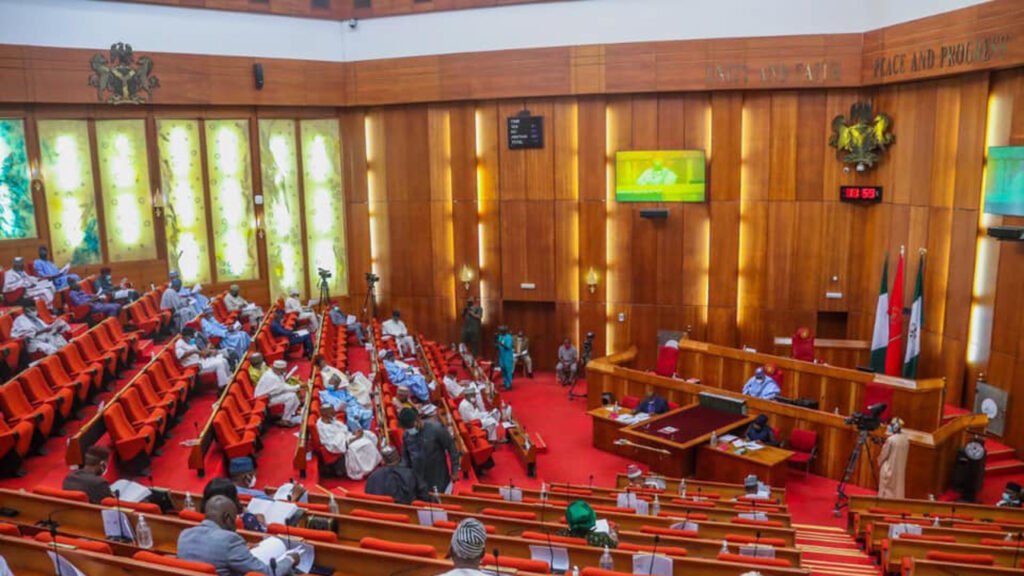
A Federal High Court in Lagos has delivered a landmark judgment declaring the controversial ₦110 billion vehicle and allowance package approved for members of the National Assembly unlawful, unconstitutional, and in violation of Nigeria’s Public Procurement Act.
The judgment, delivered by Justice Bogoro in a suit instituted by the Socio-Economic Rights and Accountability Project (SERAP), held that the planned expenditure of ₦40 billion on 465 bullet-proof vehicles for lawmakers and the allocation of ₦70 billion as support allowances lacked transparency, due process, and compliance with procurement regulations.
The court ruled that SERAP had established a strong case against the expenditure scheme and noted that despite prior correspondence sent to the leadership of the National Assembly before the suit was filed, no meaningful response was received from the defendants.
Justice Bogoro rejected arguments suggesting that the matter had become academic because the funds had already been disbursed or spent, stressing that courts retain the authority to issue declaratory reliefs whenever constitutional and statutory violations are established.
In his findings, the judge held that there was no credible evidence showing that the procurement process for the vehicles followed competitive bidding procedures or met value-for-money requirements as mandated by law. The court further observed that the defendants failed to provide convincing proof that due process was followed, a failure which significantly weakened their defense.
The court concluded that the expenditure violated the Public Procurement Act, breached the Code of Conduct for Public Officers, and offended constitutional provisions regulating the conduct of elected lawmakers. Justice Bogoro further held that the arrangement created an obvious conflict of interest because legislators directly benefited from financial decisions they personally approved.
The judgment reaffirmed that no arm of government is above constitutional scrutiny and that the judiciary has both the authority and responsibility to intervene whenever legislative actions violate the Constitution or statutory provisions.
Consequently, the court issued declarations and orders against Senate President Godswill Akpabio, Speaker Tajudeen Abbas, and members of the National Assembly, declaring the expenditure scheme unlawful and directing that future spending of public funds by the legislature must strictly comply with transparency, accountability, due process, and value-for-money principles.
Reacting to the judgment, SERAP Deputy Director Kolawole Oluwadare described the ruling as a major victory for accountability, transparency, and responsible governance.
According to him, the judgment reinforces the principle that public office is a public trust and that public resources must be managed exclusively in the public interest.
He commended Justice Bogoro for what he described as courage, independence, and sound legal reasoning in upholding the principles of accountability and fiscal responsibility at a time when millions of Nigerians are battling economic hardship, insecurity, and poverty.
Human rights lawyer Femi Falana (SAN) also hailed the judgment, stating that it exposes and challenges what he called the culture of extravagant spending by public officials while ordinary citizens continue to struggle under harsh economic conditions.
Falana urged the Revenue Mobilization Allocation and Fiscal Commission to study the judgment and fully exercise its constitutional powers under Section 70 of the Constitution to regulate the salaries and allowances of members of the National Assembly.
He further called on the National Assembly to obey the court’s decision without delay, arguing that funds lost to wasteful spending should instead be redirected towards strengthening security, improving intelligence gathering, supporting vulnerable communities, and addressing the root causes of insecurity across the country.
In a follow-up letter dated June 6, 2026, addressed to Senate President Akpabio and Speaker Abbas, SERAP urged the leadership of the National Assembly to immediately comply with the court’s orders and demonstrate genuine commitment to the rule of law.
The organization maintained that implementing the judgment would send a strong signal that the National Assembly is prepared to embrace transparency, accountability, and responsible management of public resources.
The ruling is expected to intensify public debate over legislative spending and renew calls for greater scrutiny of government expenditures amid growing economic challenges facing the nation.