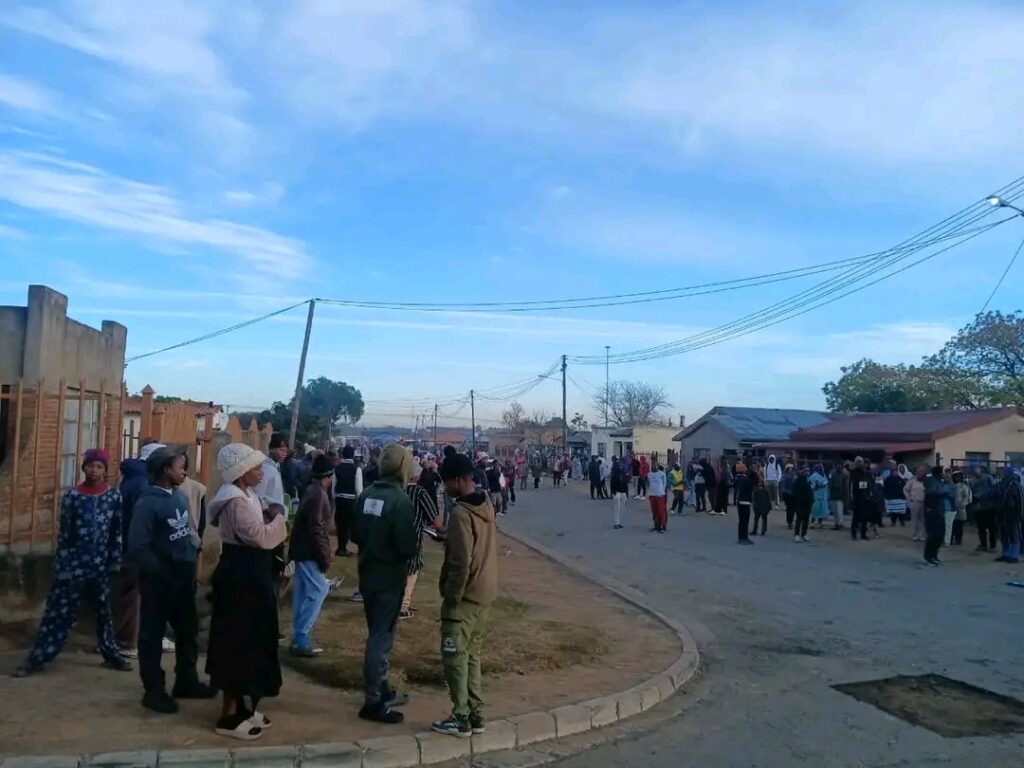
A planned protest over poor service delivery and unemployment in South Africa’s judicial capital descended into violent chaos over the weekend, as mobs ransacked foreign-owned shops across the Mangaung Metro, sparking a massive police crackdown that netted more than 140 suspects.
The unrest, initially organised by the National Service Delivery Forum to highlight grievances such as corruption, water shortages and municipal failures, was hijacked by opportunistic criminals and alleged gang members who systematically targeted tuckshops, bottle stores and grocery outlets owned by foreign nationals, particularly in townships including Rocklands, Freedom Square, Phase 6, Bloemspruit and Petrus Swartz.
Police confirmed on Monday that 142 suspects – 109 men and 33 women – had been arrested on charges of public violence, looting, possession of stolen goods, business burglary and malicious damage to property. Lieutenant Colonel Thabo Covane, provincial police spokesperson, said law enforcement had restored relative calm but warned that more arrests were imminent.
“Opportunistic groups utilised digital messages to target local businesses and tuckshops,” Covane said, adding that the unrest was fuelled by voice notes and digital posters circulated on social media calling for a “total shutdown”. Police had previously warned that such messages were false, yet the violence spread rapidly across Bloemfontein’s townships.
The looting began on Sunday evening around 7 p.m. in Bloemspruit Phase 6, where a crowd stormed a grocery store. Community members reportedly intervened to rescue the store manager before public order police arrived. Later that night in Maditlhabela, a crowd of about 80 people hurled stones at police vehicles, forcing officers to fire stun grenades and rubber bullets to disperse them. By early Monday, roads across the city were barricaded with rocks and debris, public transport was disrupted, and municipal waste collection services were suspended.
Witnesses described the targeting as chillingly selective. In Rocklands, a bottle store owned by a Chinese national was completely ransacked, while two neighbouring outlets – one owned by a South African – remained untouched. A large liquor outlet near the Dr R.P. Molemela Stadium was stripped entirely overnight following a forced entry. In a particularly volatile incident, a bakkie stopped in front of a targeted shop and a shot was reportedly fired from the vehicle before it sped away.
Mangaung Executive Mayor Gregory Nthatisi issued an impassioned plea for calm, drawing a firm line between legitimate socio-economic grievances and outright criminality. “Whilst we recognise that communities may hold genuine concerns relating to unemployment, crime, illegal business practices, pressure on public services, and broader socio-economic frustrations, the MMM wishes to state unequivocally that no grievance, irrespective of its nature, justifies lawlessness, violence, looting, intimidation, destruction of property, or the disruption of schooling and essential public services,” Nthatisi said in a statement.
The mayor warned that the destruction of infrastructure and businesses ultimately harms working-class communities the most. “The interruption of education compromises the future of our children, while attacks on businesses and infrastructure ultimately harm the very communities from which these actions emerge,” he said.
City manager Sello More echoed the condemnation, urging communities not to take the law into their own hands. “We cannot justify looting and say it is an act of dealing with illegal immigrants. Only God knows if people owning these shops are legal or illegal. So we cannot be punishing people for owning shops even if they are legal,” More said.
The Black Business Chamber of the Free State also condemned the violence, warning that the destruction of businesses, regardless of ownership, undermines jobs, investor confidence, and already fragile township economies. “The chamber acknowledges concerns around unfair competition, non-compliance and economic exclusion, but rejects all forms of violence and lawlessness,” the organisation said.
The National Service Delivery Forum, which organised the shutdown, distanced itself from the looting. Forum leader Potso Motoko insisted that the demonstration was intended to focus on government accountability and service delivery failures, not criminal activity. “Our plans were to shut down Mangaung metro and the provincial government that is failing us. We were going to march and protest and shut down those offices which are not responding to our issues,” Motoko said, adding that the forum believed criminal elements hijacked the action.
Despite the widespread chaos, the shutdown largely failed to achieve its aims. Children attended school and people went to work across most of Bloemfontein, and several minibus taxis continued transporting commuters. One resident, a law student, told reporters that while she condemns the looting, underlying frustrations remain. “People are really hurt. They keep hurting people with the fake alcohol and overpriced alcohol. The police are failing to do their job. They were supposed to take this alcohol off our streets a long time ago,” she said.
Police said a helicopter had been deployed to monitor the affected areas, with high-visibility policing continuing to prevent further unrest. Schools in Bloemfontein’s townships remained closed as a safety precaution. Arrested suspects are being processed and are expected to appear in court soon.
Authorities condemned the attacks unequivocally and warned residents against taking the law into their own hands, urging that grievances be addressed through dialogue and lawful state institutions rather than through destruction and vigilante violence.