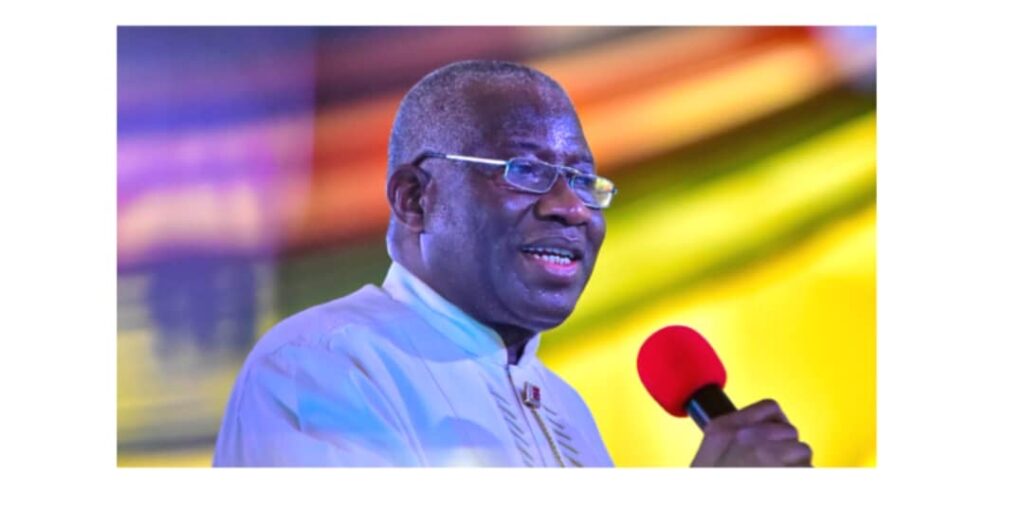
Abuja is on edge as former President Goodluck Jonathan is expected to appear before the Federal High Court on Friday in a politically charged suit challenging his eligibility to contest future elections, even as fresh intelligence from political circles suggests he may use the court appearance as a launchpad for a dramatic return to the presidential race in 2027.
The case, filed under FHC/ABJ/CS/2102/2025 by lawyer Johnmary Jideobi, is asking the court to permanently bar Jonathan from presenting himself as a candidate in any political election, arguing that his time in office has already reached the constitutional limit. The suit also seeks to compel the Independent National Electoral Commission to reject or withhold his name from any future presidential ballot.
At the centre of the legal argument is the claim that Jonathan has already been sworn in twice—first in 2010 following the death of Umaru Musa Yar’Adua, and later after winning the 2011 presidential election—thereby exhausting the two-term constitutional threshold for the presidency.
Justice Peter Lifu had earlier ordered that hearing notices be served on all defendants, after noting that responses were not filed within the stipulated timeframe. Jonathan is listed as the first defendant, while the Independent National Electoral Commission and the Attorney-General of the Federation are named as second and third defendants respectively.
In an affidavit supporting the suit, deposed by Emmanuel Agida, the plaintiff maintains that Jonathan’s tenure trajectory clearly disqualifies him from any further presidential ambition, insisting that allowing another run would violate the Constitution and set a dangerous legal precedent.
But beyond the courtroom battle, political tension is reportedly building around what Jonathan may do immediately after the proceedings.
Multiple sources familiar with the situation claim that the former president is not only preparing to appear in court but may also use the moment to signal a return to frontline politics, including an anticipated declaration of interest in the 2027 presidential race and possible unveiling of his preferred political platform.
According to one source, “GEJ is planning to appear in court tomorrow, Friday, over a lawsuit seeking to bar him from contesting after which he will declare his presidential ambition and party platform that he intends to use.”
The development has already triggered intense speculation within political circles, especially as Jonathan recently hinted at a possible return when he told a group of youths urging him to run that he would consult widely before making a decision.
“Presidential race is not a computer game. But I’ve heard you, and I’ll consult widely,” he said, adding that his priority remains the future of young Nigerians and their access to hope.
Jonathan, who left office in 2015 after losing to Muhammadu Buhari, has largely maintained a quiet international political profile since then, often seen as a statesman in African peace mediation and democratic transition efforts.
However, this new legal and political storm is rapidly pulling him back into Nigeria’s heated electoral spotlight, with supporters and critics already sharply divided over both his eligibility and the implications of a potential comeback.
As Friday approaches, Abuja is bracing for what may become one of the most consequential courtroom appearances in Nigeria’s recent political history—one that could either shut the door on Jonathan’s ambitions or unexpectedly reopen the path to a dramatic 2027 presidential contest.