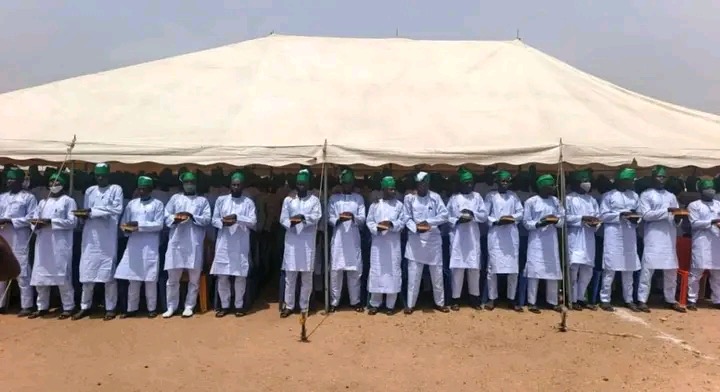
A total of 744 former terrorists and victims of violent extremism have graduated from the Federal Government’s Deradicalisation, Rehabilitation and Reintegration (DRR) programme, under the auspices of Operation Safe Corridor.
The graduation ceremony took place on Thursday in Gombe State. According to officials, the majority of the beneficiaries hail from Borno State, with others from Yobe, Adamawa, Kano, and several other parts of the country. The cohort also includes a small number of foreign nationals from neighbouring countries.
Speaking at the event, the Chief of Defence Staff, Gen. Olufemi Oluyede, described the initiative as a strategic intervention aimed at reducing extremism and promoting lasting peace—not a reward for past violence. Represented by Rear Admiral Kabiru Tanimu, he stressed that while military operations remain essential, sustainable stability requires addressing the root causes of radicalisation.
He noted that the programme demonstrates Nigeria’s commitment to combining force with rehabilitation efforts in order to weaken extremist recruitment and encourage reintegration into society.
“This is not an amnesty programme, but a deliberate strategy to address the human dimensions of conflict, reduce recidivism, and dismantle the ideological foundations of violent extremism,” Oluyede said.
He urged the graduates to embrace the opportunity for a fresh start and contribute positively to their communities, warning against any return to violence.
The Coordinator of Operation Safe Corridor, Brig. Gen. Yusuf Ali, explained that the initiative was established as a structured response to insurgency, offering a pathway for disengagement and reintegration for individuals willing to renounce violence.
He added that participants underwent comprehensive rehabilitation, including psychosocial support, vocational training, religious reorientation, civic education, and behavioural transformation programmes.
“Many of the beneficiaries were victims of coercion, abduction, or manipulation,” Ali said. “This process is about rebuilding identity, restoring values, and preparing them to return as responsible citizens.”
The Gombe State Government also called on the graduates to make good use of the opportunity and live as law-abiding citizens, emphasising that community acceptance is vital for sustaining peace efforts.
Authorities further highlighted that reintegration remains a collective responsibility involving state governments, community leaders, and families to ensure long-term success.
Operation Safe Corridor, established in response to the Boko Haram insurgency, continues to evolve as a multi-agency effort supported by local and international partners. The programme reflects a broader shift towards combining military and non-military strategies in addressing insecurity.
The latest graduation underscores the Federal Government’s ongoing efforts to promote stability, prevent re-radicalisation, and rebuild communities affected by years of conflict.