
Nigeria’s premier university, University of Ibadan, spent over ₦653 million on honorarium and sitting allowances in 2024, according to its audited financial statement for the year.
A review of the document shows that the institution also spent ₦221 million on refreshments and meals within the same period.
The financial statement, published on the university’s official website, is the latest available report released by the institution.
According to the report, the university’s electricity bill alone reached about ₦1.5 billion during the 2024 fiscal year, making it one of the largest single expenditures recorded.
Further breakdown of the accounts indicates that examination expenses stood at ₦302 million, while academic-related expenses amounted to ₦392 million. Laboratory and teaching materials received ₦154 million.
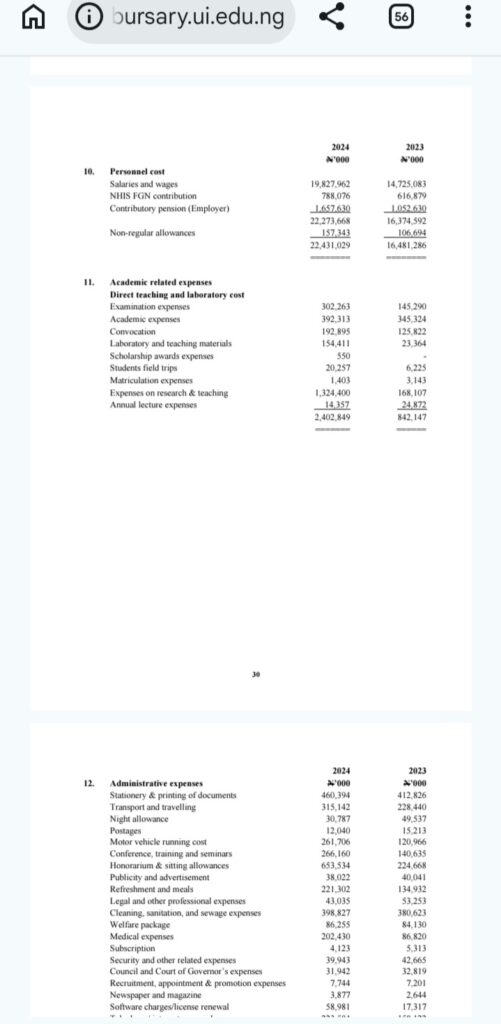
Notably, the ₦653 million spent on honorarium and sitting allowances exceeded the amounts allocated to several academic needs, including laboratory materials, examination costs and other teaching-related expenses.
A review of the university’s 2023 financial statement shows a similar pattern in spending priorities.
During that year, the institution spent a combined ₦358 million on non-academic items such as refreshments, meals, and honorarium or sitting allowances. The amount was higher than the ₦345 million allocated to academic expenses.
Specifically, ₦134 million was spent on refreshments and meals in 2023, more than double the ₦65 million recorded for the same category in 2022. Honorarium and sitting allowances for that year stood at ₦224 million, compared with ₦129 million in the previous year.
Combined, the spending on refreshments, meals, and administrative allowances in 2023 exceeded the ₦168 million spent on research and other teaching-related activities, as well as the ₦23 million allocated for laboratory and teaching materials.
The figures suggest a continuing trend in which the university allocates significant funds to administrative perks and welfare items, while key academic needs receive comparatively lower funding.
The disclosures have raised concerns among observers about the institution’s budget priorities and the balance between administrative spending and its core mandate of teaching and research.