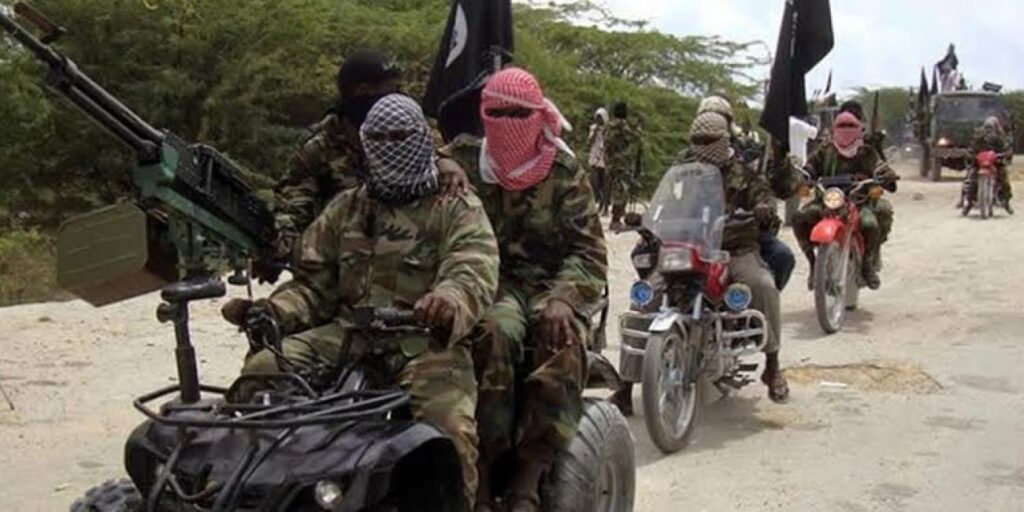
A handwritten letter allegedly sent by Boko Haram insurgents to a traditional ruler in Kwara State weeks before a deadly attack has emerged, raising fresh questions about missed warning signs and government inaction.
The letter, dated January 8, 2026 (19 Rajab 1447 AH), was reportedly written in Hausa by members of Jama’atu Ahlis Sunna Lidda’awati wal-Jihad, commonly known as Boko Haram. It was addressed to the Sarkin Woro, the traditional ruler of Woro community in Kaiama Local Government Area.
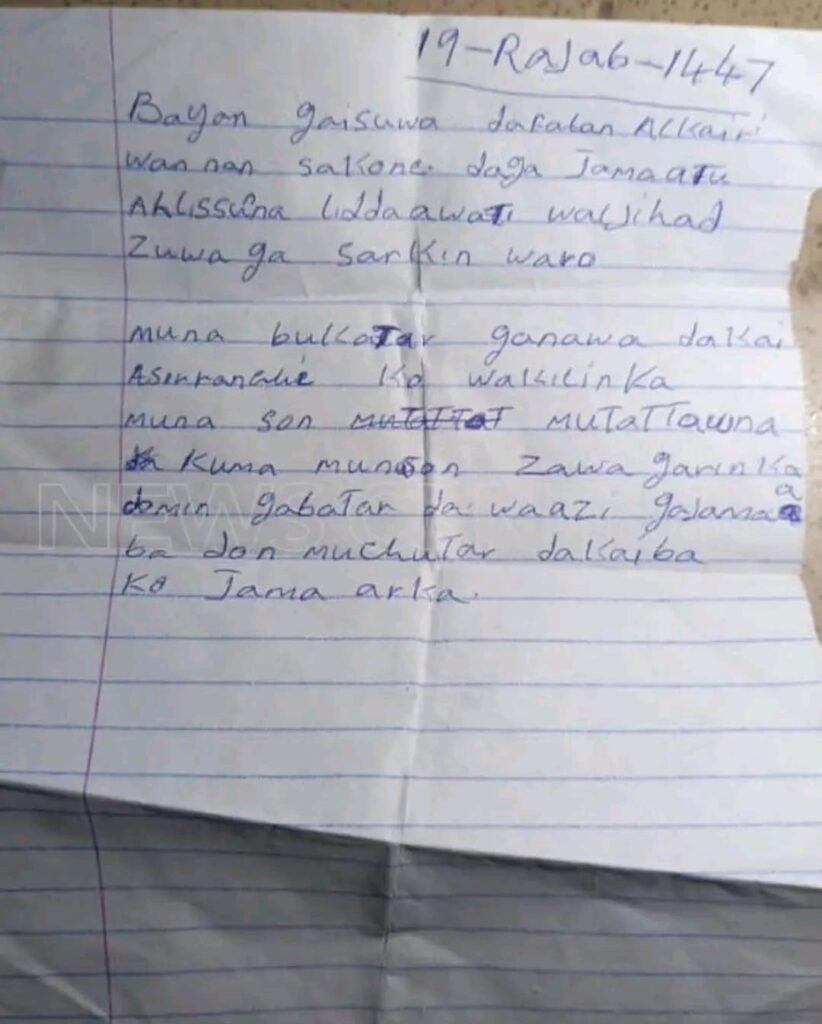
In the message, the group requested a meeting with the monarch or his representative, presenting their intention as peaceful and religious. They claimed the visit was meant for “preaching and guidance” and insisted it was neither a threat nor a declaration of war.
“After greetings and good wishes, this message is from Jama’atu Ahlis Sunna Lidda’awati wal Jihad to the Sarkin Woro,” the letter read in part.
“We request a meeting with you personally or with your representative. We wish to discuss matters with you, particularly concerning preaching and guidance among your people. This is not a threat or a declaration of war against you or your people.”
Weeks later, the same communities were hit by a coordinated attack that left more than 170 people dead, according to residents and local accounts.
Community members told Chronicles Reporters that the attack did not come as a surprise to them. They said they had repeatedly raised alarms months earlier about suspicious movements of armed men in forests surrounding their villages.
“Youths in this area reported several times that strange armed people were camping in the bushes near our communities,” one resident said.
“They told the traditional rulers, the local government, and even the state government. Everyone knew, but nobody protected us.”
Another resident confirmed that the warnings were escalated beyond the community level.
“We begged the local and state governments to send security operatives to clear the forests,” he said.
“They kept assuring us that something would be done, but nothing happened.”
According to residents, fear intensified around mid-2025 as the presence of the armed men became more visible.
“At a point, the governor even promised that soldiers would be deployed here,” a community source said.
“He told some of our leaders that the army would come, but no soldier ever arrived. We were left on our own.”
Survivors said the attackers later struck several villages in what appeared to be a well-planned operation, burning homes and killing residents while security forces failed to intervene for hours.
“This did not start overnight,” one resident explained.
“They stayed around us for months. We warned the authorities. If they had listened, this tragedy could have been prevented.”
Governor AbdulRahman AbdulRazaq, who later visited the area with security chiefs, said about 75 people were killed after they resisted the extremists’ attempt to impose what he described as a misguided ideology on the community.
But residents strongly disputed the figure and accused the government of downplaying the scale of the massacre.
“It is so sad,” one resident told Chronicles Reporters.
“The governor came only after people had died, and they even claimed it was just 75 people. Anyone who believes the number is not up to 100 should come here and count the bodies themselves. The government was only doing eye-service for the media.”
He added that the attack was foreseeable and preventable.
“They knew these people would attack us, and they did nothing. Now they are crying on television. That does not bring our people back.”
As mourning continues in Woro and neighbouring communities, residents are demanding accountability, insisting that early warnings were ignored and that the massacre should never have happened.