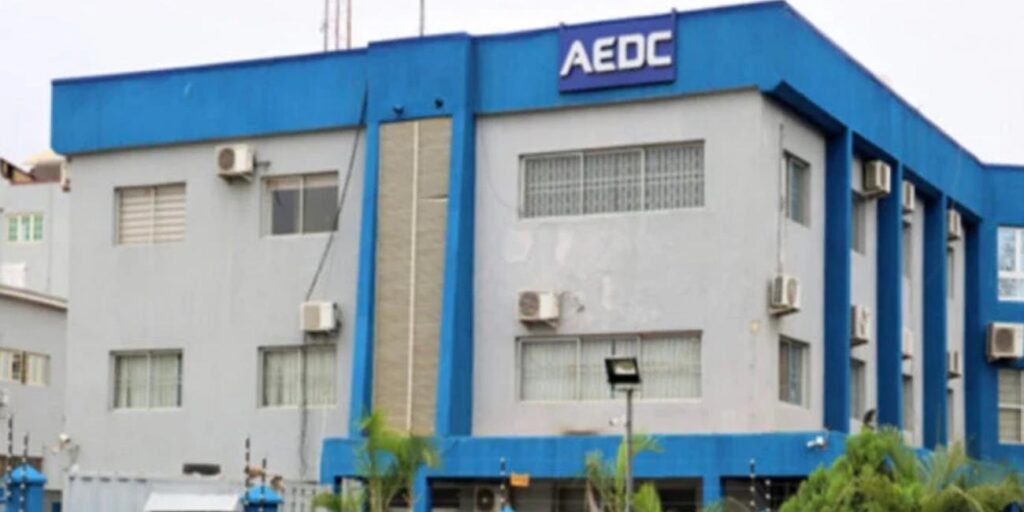
Disengaged employees of Abuja Electricity Distribution Plc (AEDC) have rejected the company’s response to their demand for improved exit compensation, describing it as evasive, unserious and reflective of deeper institutional problems within the power utility.
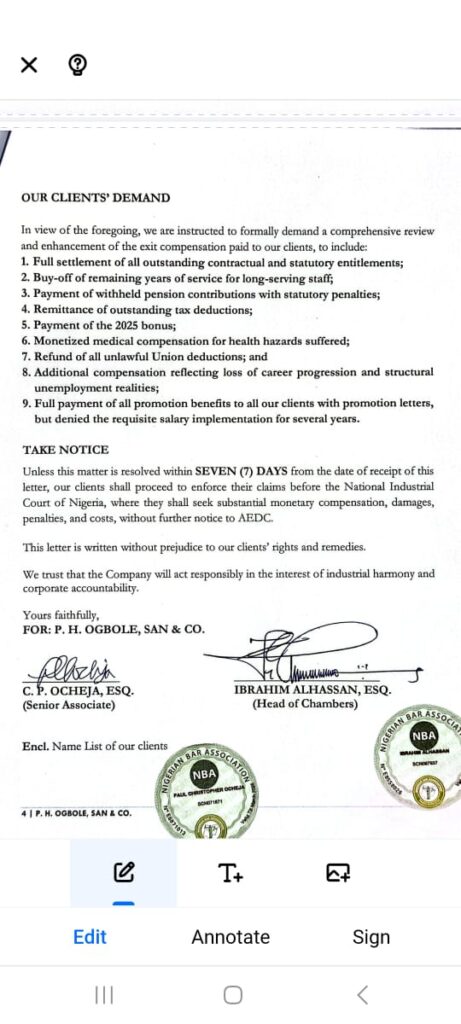
The former workers, who were disengaged late last year, are demanding a comprehensive review of the severance package paid to them, alongside full settlement of all outstanding contractual and statutory entitlements. Their demands include payment of withheld pension contributions with statutory penalties, remittance of outstanding tax deductions, payment of the 2025 bonus, monetised medical compensation for workplace health hazards, refund of allegedly unlawful union deductions, and compensation for loss of career progression.
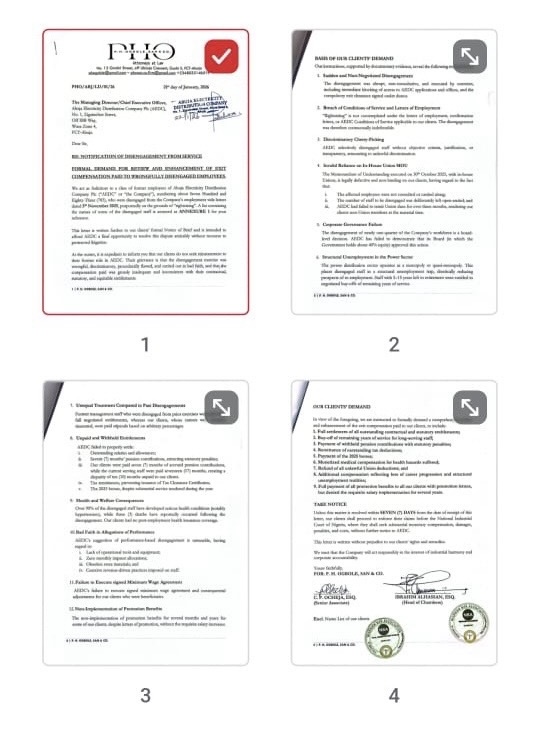
They are also seeking a buy-off of unexpired years of service for long-serving staff, as well as full implementation and payment of promotion benefits for employees who received promotion letters but were denied corresponding salary upgrades for several years.
The affected workers, represented by P. H. Ogbolé, SAN & Co., said AEDC’s response to their formal demand was grossly inadequate, particularly as it was conveyed through an email rather than a formally acknowledged letter bearing an official stamp or receipt.
According to them, the mode of response underscores what they described as the company’s lack of seriousness, accountability and respect for due process, while reinforcing earlier concerns about AEDC’s handling of labour relations and statutory obligations.
In the email dated January 29, 2026, AEDC acknowledged receipt of the workers’ demand dated January 21, 2026, and requested additional time to review the issues raised, without committing to a specific timeline for resolution.
“We acknowledge receipt of your correspondence dated January 21, 2026, on behalf of your clients, the former employees of Abuja Electricity Distribution Plc (AEDC),” the email read in part.
“Management is currently undertaking a comprehensive review of the contents of your letter… We will respond once our assessment is complete and aim to provide a detailed reply within a reasonable time frame.”
The disengaged employees described the response as “open-ended” and symptomatic of what they said was the arbitrary manner in which nearly 800 staff members were laid off without justification.
They alleged that the disengagement was carried out under a questionable agreement purportedly reached with a compromised in-house union, which they claimed was riddled with loopholes and exploited to victimise workers. According to them, the process failed to specify the number of staff to be affected and was executed without any stakeholders’ meeting, despite the fact that many of those disengaged still had several years left before retirement.
“This sector is already notorious for structural unemployment,” one affected employee said. “To disengage experienced staff without justification or consultation is not only cruel but economically reckless.”
Beyond their personal grievances, the former workers accused AEDC of operating with impunity, arguing that the same disregard for due process evident in their disengagement is what customers in the company’s franchise area have experienced for years. They cited poor service delivery, widespread estimated billing and unresolved consumer complaints as signs of systemic failure within the company.
Unimpressed by AEDC’s response, the workers, through their lawyers, said they are preparing to initiate legal action at the National Industrial Court of Nigeria. They warned that the suit would go beyond compensation claims and would expose internal practices and alleged underhand dealings within the company.
Industry observers say the looming legal battle, led by senior labour lawyer P. H. Ogbolé, SAN, could reignite broader debates around labour rights, corporate governance and regulatory oversight in Nigeria’s privatised power sector.
For now, the disengaged workers insist they will no longer wait indefinitely.
“The courts will decide,” one source said. “And Nigerians will finally see how this company really operates.”