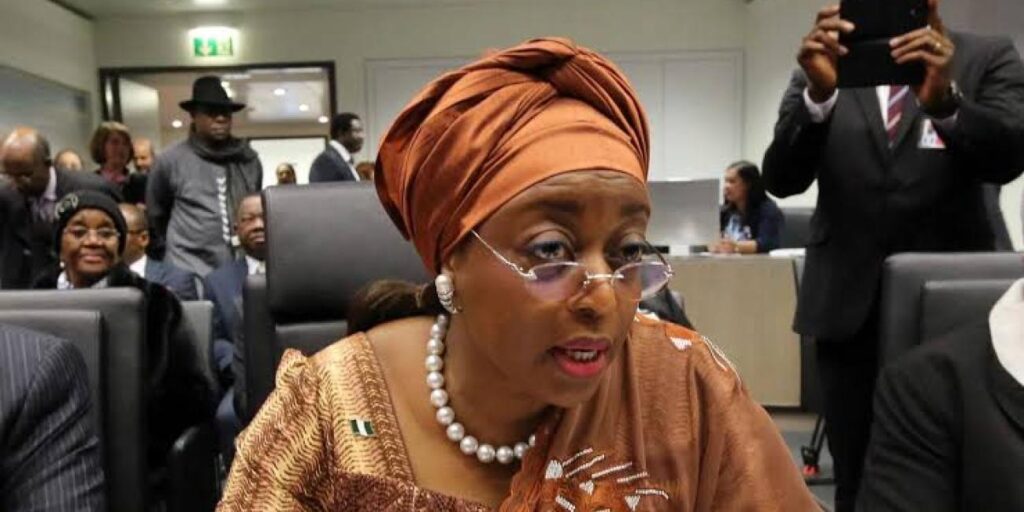
Fresh details emerged on Thursday at Southwark Crown Court in London as prosecutors continued presenting evidence in the ongoing corruption trial of former Nigerian Minister of Petroleum Resources, Diezani Alison-Madueke.
At the resumed hearing, UK prosecutors told the court they had submitted a wide range of documentary and digital materials, including audio transcripts, WhatsApp messages, emails, and written correspondence. The materials, they said, were recovered during searches carried out by the UK’s National Crime Agency and the Metropolitan Police at properties linked to Alison-Madueke.
While outlining their case, prosecutors stressed that the allegations being referenced are based on the evidence before the court and remain subject to judicial review and determination.
During proceedings, the court heard references to claims allegedly linked to oil executive Olatimbo Ayinde, suggesting that individuals connected to businessman Kola Aluko benefited from their association with him. Ayinde was described in court as an ally of Nigeria’s current President, Bola Tinubu.
Prosecutors also mentioned what they described as a bitter dispute involving Ayinde and billionaire businessman Femi Otedola. The court was told that a letter, reportedly written to former President Muhammadu Buhari, raised concerns about threats to Ayinde’s safety.
Further evidence presented alleged that businessman and politician Dumebi Kachikwu acted as a go-between in certain financial dealings connected to his brother, Ibe Kachikwu, a former Minister of State for Petroleum Resources and ex-Group Managing Director of the Nigerian National Petroleum Corporation (NNPC).
According to the prosecution, the materials referenced included claims of large financial transfers and luxury spending, such as the alleged purchase of an expensive wristwatch from Harrods and payments said to have covered medical bills. The court also heard that some transactions were described, in correspondence written by lawyer and current Minister of Aviation and Aerospace Development, Festus Keyamo, as being related to land deals.
In addition, prosecutors told the court that the evidence included records of phone communications involving President Bola Tinubu and former Vice President Yemi Osinbajo, as well as documents and transcribed materials linked to meetings involving Osinbajo’s former chief of staff, Adeola Ipaye.
The prosecution emphasized that all references made in open court formed part of the evidentiary bundle supporting the charges against Alison-Madueke. The defence is expected to respond as the trial progresses.
Alison-Madueke, a former president of the Organisation of Petroleum Exporting Countries (OPEC), is facing five counts of bribery and one count of conspiracy to commit bribery. She has pleaded not guilty to all charges.
Jurors had earlier been told that the former minister allegedly lived a lavish lifestyle in the United Kingdom, including frequent high-end shopping at Harrods through a personal shopper service reportedly reserved for top-spending clients. Prosecutors allege that more than £2 million was spent at the luxury store on her behalf, using cards linked to oil magnate Kolawole Aluko and his company, Tenka Limited.
The court also heard allegations that about £4.6 million was spent refurbishing properties in London and Buckinghamshire said to be associated with her use.
Aluko, whose name appeared in the Panama Papers, was previously investigated over claims that he helped move large sums of money out of Nigeria as kickbacks while holding and seeking oil contracts with state-owned entities.
Outside the courtroom, Alison-Madueke drew attention after being seen leaving the court on Thursday without the walking stick she had used during earlier appearances. She was filmed walking unaided and entering a waiting BMW, accompanied by a driver or bodyguard. Earlier in the week, she had been observed using the walking aid when arriving at and leaving the court.
Prosecutors earlier told the court that Alison-Madueke allegedly accepted £100,000 in cash while in office, alongside private jet flights, chauffeur-driven cars, and luxury items from industry figures seeking oil and gas contracts in Nigeria.
The trial continues.