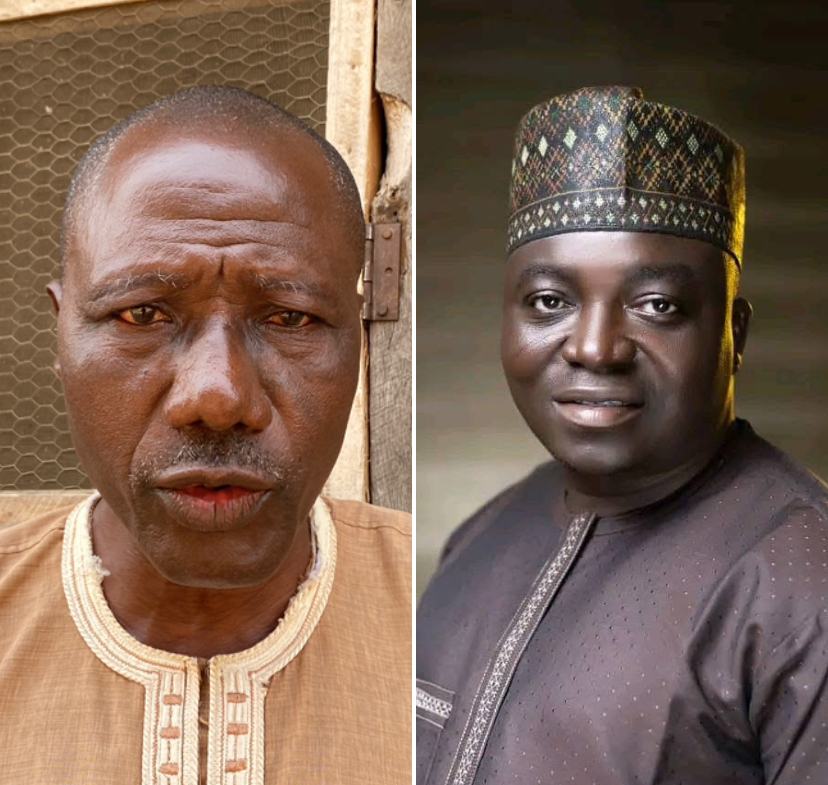
Gwagwalada is currently embroiled in a political storm following allegations that the ECWA 1 Pastor, Rev. Dr. Iliya Cas, was threatened by the All Progressives Grand Alliance (APGA) chairmanship candidate for the area council, Hon. Ezekiel Zezelaga. The controversy has sparked intense public debate over the boundaries of political influence, religious freedom, and civic responsibility in the community.
The allegations emerged in a social media post shared by Muhammad Isah Hassan, a media operative aligned with the Peoples Democratic Party (PDP) and supporter of Hon. Kasim Mohammed, the PDP chairmanship candidate. According to the post, Hon. Ezekiel confronted Rev. Dr. Cas over his decision to host Hon. Kasim Mohammed at ECWA 1 Church. The APGA candidate reportedly questioned the pastor, asking whether Kasim Mohammed is a Christian.
Sources claim that in response, Rev. Dr. Cas challenged Hon. Ezekiel’s own Christian credentials, pointing out that he had not been observed attending church services for over six years.
The incident has reignited debates within Gwagwalada about political intimidation, religious respect, and the role of clergy in public life. Local citizens have drawn parallels between Hon. Ezekiel’s previous confrontations with prominent Gwagwalada activist Manasseh B. Paul, who he adopted and illegally arrested because of a publication by chronicles Reporters on allegations of contract racketeering & buying of property in proxy for Hon. Abu Giri the area council chairman, and this latest clash with the church leader.
Manasseh, a citizen reporter and human rights activist, took to social media to highlight the gravity of the situation. In a post that has drawn widespread attention, he wrote:
“Just concluded a courageous and historic engagement with Rev. Dr. Iliya Cas, Pastor of ECWA 1 Church, Gwagwalada, in the face of intimidation and threats to his life by a political tyrant Hon Ezekiel Zezelaga, the APGA chairmanship candidate.
This is not just a conversation—it is a stand against fear, oppression, and the weaponization of politics against the pulpit. When power turns predatory and democracy mutates into tyranny, silence becomes betrayal.
The clergy must not be hunted for conscience, and Gwagwalada must not be ruled by terror masked as ambition. This is a line drawn. The people are watching. History is recording. Resistance has begun.”
Manasseh’s statement frames the incident not simply as a local political dispute but as a broader struggle for moral and civic integrity in Gwagwalada. It underscores the emerging tension between religious freedom and political coercion, raising pressing questions about the conduct of electoral campaigns and the responsibilities of political aspirants toward the communities they seek to lead.
As the story develops, residents of Gwagwalada are calling for transparency, restraint, and accountability from all parties involved. Many citizens argue that the sanctity of religious spaces must be respected and that no political ambition should override the principles of conscience, safety, and civic harmony.
Chronicles Reporters will continue to follow this story closely, as the public discourse around political intimidation and civic rights intensifies.