The Kwali Area Council, once known for its communal harmony and peaceful coexistence, has in recent years become a flashpoint of political violence, insecurity, and failed leadership. Investigations and historical accounts reveal that the current administration has presided over one of the most turbulent eras in the council’s history.
Violence first erupted during the 2019 rerun election that brought the current leadership to power. The polls were marred by widespread thuggery, assaults, and chaos at several polling units, leaving many voters injured and traumatized.
The situation worsened in 2022, during the chairman’s second term, when violent clashes broke out between PDP and APC supporters. In the Sheda community, a PDP stalwart, Ibrahim P.A., saw his home reduced to ashes, while another resident, Ilyasu Hashimu, was tragically killed. The case remains in court, emblematic of a growing culture of impunity in the area.
Records also show that in 2018, a man identified as Philemon was stabbed to death by individuals allegedly linked to his second wife’s family. Sources claim the current administration influenced the outcome of the investigation, leaving the victim’s family without justice or closure.
Between 2023 and 2024, insecurity escalated sharply across Yewuti, Bako-Dabi, and Yangoji communities. Waves of kidnapping, banditry, and armed robbery swept through these areas, claiming lives and destroying livelihoods. Victims recount harrowing experiences in captivity, while survivors continue to live in fear.
In early 2024, another incident shook residents when political thugs attacked Daniel Datu P.A., leaving him with multiple injuries in what was described as an assassination attempt.
Just months later, intercommunal violence erupted in Kundu between Bassa residents and Fulani herdsmen, resulting in injuries and displacements.
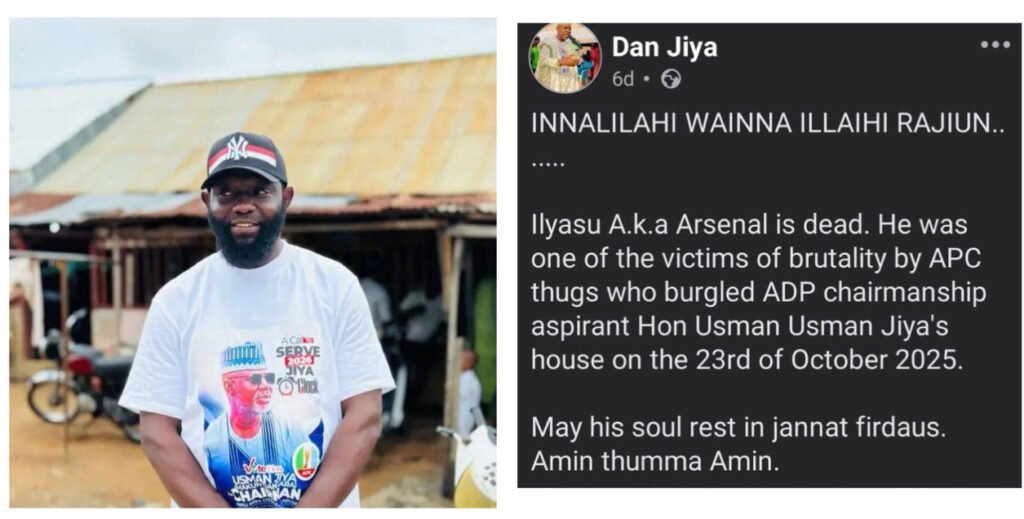
Most recently, tragedy struck again when Ilyasu Alhassan — a known supporter and close ally of the chairman, Hon. Danladi Chiya — was allegedly murdered by political thugs loyal to the same administration he helped into power. Witnesses describe Alhassan as a devoted supporter who often referred to the chairman fondly as “my friend, my boss.” His killing, however, was met with silence and insensitivity from the leadership, as neither condolences nor official visits were made to the bereaved family.
Observers and residents alike accuse the current administration of deepening divisions along regional, religious, and ethnic lines — a first in the council’s political history.
As the violence persists, a critical question emerges from the people of Kwali: What does peace mean to an administration that claims to be peace-loving, yet presides over so much bloodshed and division?