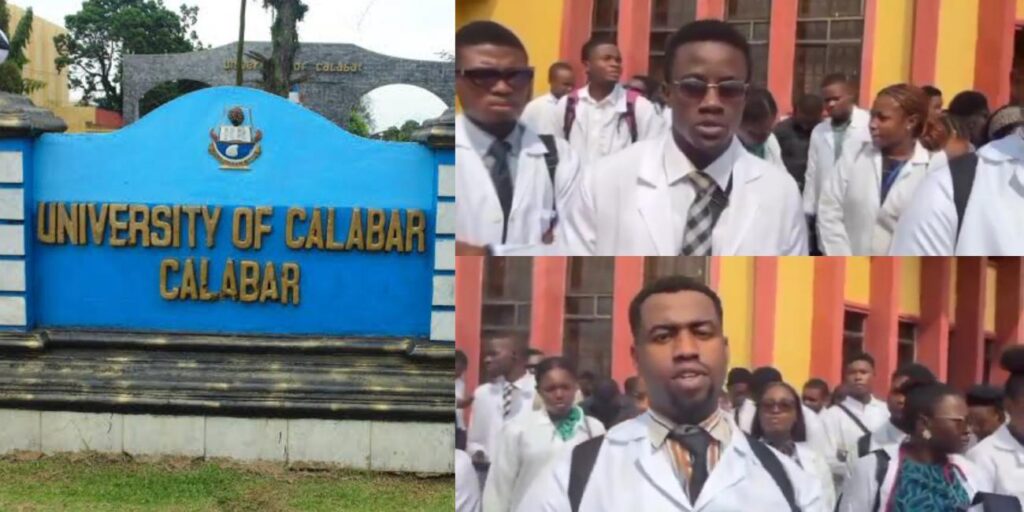
Over 300 dental students at the University of Calabar (UNICAL) are grappling with anxiety and uncertainty following the withdrawal of accreditation for their programme. After dedicating seven years to rigorous academic and clinical training, their futures now hang in the balance—a situation that has triggered widespread anger and emotional reactions, especially on social media platforms.
In a widely circulated video, one student, speaking on behalf of his colleagues while surrounded by a crowd of affected students, expressed their collective frustration and heartbreak.
“Seven years ago, my classmates were admitted into this institution with dreams of becoming practicing dental professionals,” he said. “Today, after years of hard work, they are being told that those dreams may not come true.”
Visibly emotional, he continued: “These are people I’ve studied with, laughed with, shared late nights of studying with. You can’t just tell them now that all their efforts were for nothing.”
The accreditation crisis stems from what has been described as an over-admission of students into the dentistry programme—an issue that ultimately led the Medical and Dental Council of Nigeria (MDCN) to withdraw its approval of the department.
As a consequence, reports indicate the university instructed about 300 students, including those in their final year, to either withdraw or seek transfers to other institutions. The move has sparked national outcry and urgent calls for the intervention of regulatory bodies and the federal government.
Students claim that the university recently sent out letters inviting them to a meeting slated for July 7, with the administration citing “non-regular” admissions as the subject. According to them, while the letter did not explicitly say they were being expelled, its tone and timing have been interpreted as the beginning of a formal dismissal process.
The loss of accreditation presents a devastating blow to the affected students, potentially disqualifying them from mandatory housemanship placements and barring them from obtaining professional licenses—effectively rendering their years of academic pursuit worthless.
In the face of this crisis, both students and their families are pleading with the National Universities Commission (NUC), the Medical and Dental Council of Nigeria (MDCN), and the Federal Ministry of Education to urgently step in and resolve the issue.
As of now, the University of Calabar has not issued a formal statement detailing the exact reasons behind the withdrawal of the programme’s accreditation or outlining a plan to address the fallout.
Speaking to The Nation, one affected student said, “We’re in our fourth year. We’ve paid fees, attended clinicals, passed all required courses—and now we’re being told we shouldn’t have been admitted in the first place?”
She added, “It wasn’t us who set the admission quota. Why should we pay the price for the institution’s administrative failure?”
There are also reports that some students were warned not to speak to the media about the situation.
“They told us to stay quiet—even among ourselves,” another student alleged. “But we’re done being silent. Our families have sacrificed for us. We deserve explanations.”
This development has reignited broader concerns about regulatory lapses and poor oversight in Nigeria’s specialised medical training system. For now, students, parents, and concerned stakeholders await concrete action to prevent what could become a major setback for hundreds of aspiring dental professionals.
Join our WhatsApp Channel for more updates:
https://whatsapp.com/channel/0029VabITrvEAKW7DSkTfP0J